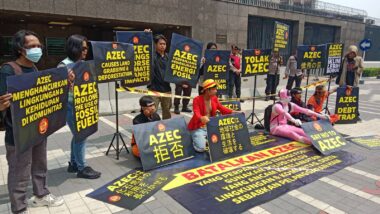
Indonesian and Japanese Civil Society Groups Call for “No Support from Japanese Public Institutions for the Tangguh LNG Expansion Plans in West Papua Province”
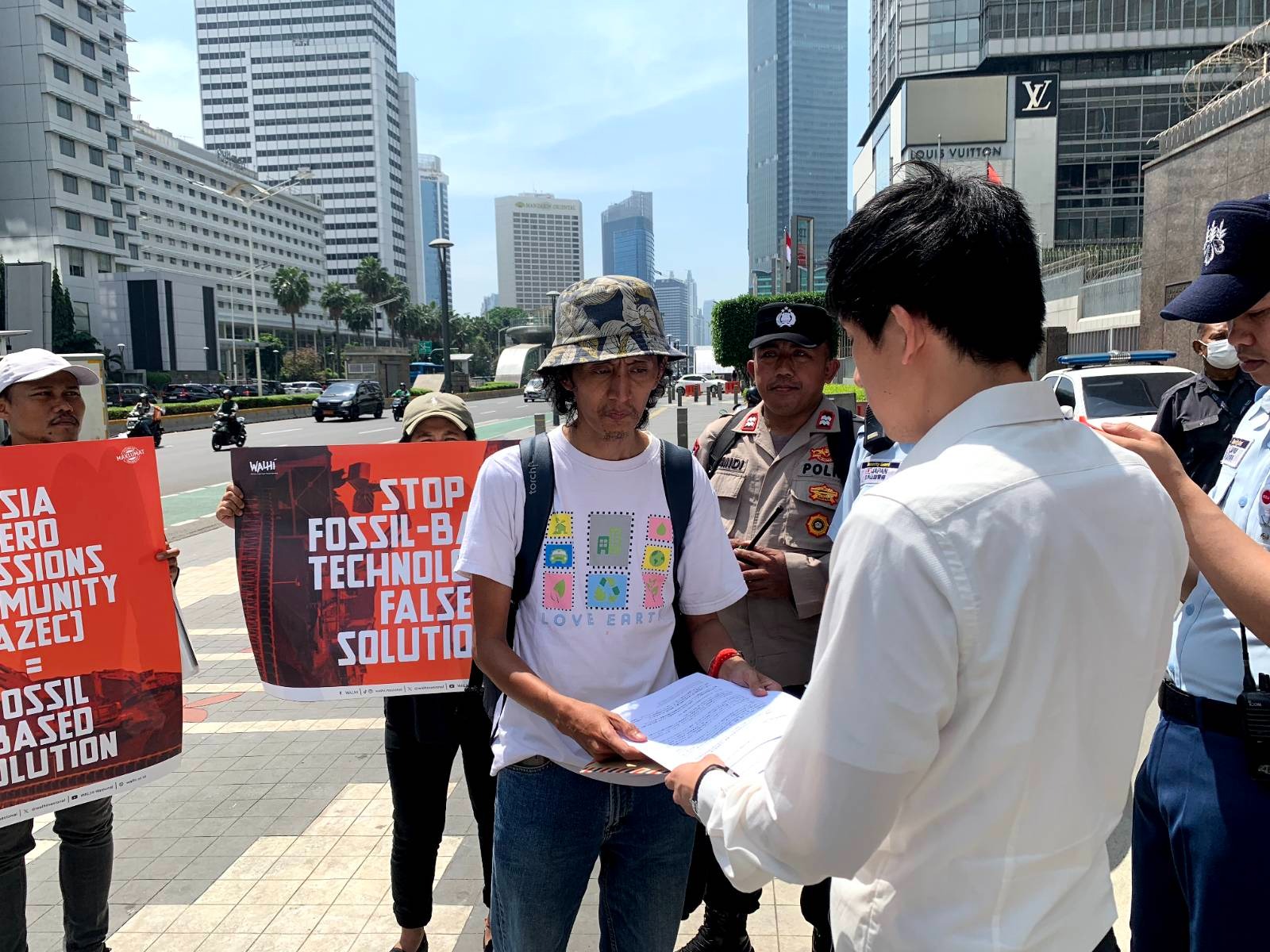
On February 13, 2026, 10 civil society organizations from Indonesia and Japan submitted a petition to the Ministry of Finance (MoF), the Ministry of Economy, Trade and Industry (METI), the Japan Bank for International Cooperation (JBIC; 100% state-owned), and the Nippon Export and Investment Insurance (NEXI; 100% state-owned), urging them to refuse to provide support for any expansion plans related to the Tangguh LNG (Liquefied Natural Gas) project (Tangguh LNG) in West Papua Province, Indonesia. The letter emphasized that such expansion would further accelerate the climate crisis, threaten the environment and human rights of local communities, and delay Indonesia’s just energy transition.
In the letter, the civil society groups state that to prevent disasters like those on Sumatra from recurring in the future, these expansion plans must be halted, and that the transition to clean, sustainable renewable energy based on community needs must proceed without delay. It also points out the following six “Reasons Why JBIC and NEXI Must Not Support the Tangguh LNG Expansion Plans”:
- Environmental, Social, and Human Rights Impacts on Indigenous Communities Since the Early Phase of the Project
- Suppression of Civil Society Space in Papua
- Inconsistent with the Paris Agreement’s 1.5°C Goal
- Failure to Comply with G7 Commitment
- CCUS (Carbon capture, utilization and storage) is a False Solution
- Prolonged Fossil Fuel Dependence and Delayed Energy Transition in Indonesia
Tangguh LNG is a project pursued by a consortium led by BP plc as operator and largest investor (40.22%) under a production sharing contract extending until the end of 2055. Approximately 46% of the consortium’s interests are held by six Japanese companies (Mitsubishi Corporation, INPEX CORPORATION, ENEOS Xplora Inc., LNG JAPAN CORPORATION (a joint-subsidiary of Sojitz Corporation and Sumitomo Corporation), MITSUI & CO., LTD.) and Japan Organization for Metals and Energy Security (JOGMEC). JBIC and NEXI have also provided support to the Tangguh LNG twice since the 2000s. Kansai Electric Power Co., Inc. also purchases gas from this project.
Given the deep involvement of Japanese public and private entities in the implementation of the Tangguh LNG, the roles and responsibilities of Japan’s public financial institutions, JBIC and NEXI, in determining the feasibility of the expansion plan, are significant. NEXI, which has already formally begun considering support for the expansion plan, must immediately stop such consideration. Furthermore, JBIC, which has not formally started considering support, must reject to consider support even if requested for this expansion plan.
For more details, please refer to the following petition.
>PDF is available here
Petition: Do Not Support the Tangguh LNG Expansion Plans in West Papua, Indonesia
February 13, 2026
Ms. Satsuki Katayama, Minister of Finance
Mr. Ryosei Akazawa, Minister of Economy, Trade and Industry
Mr. Nobumitsu Hayashi, Governor, Japan Bank for International Cooperation (JBIC)
Mr. Atsuo Kuroda, Chairman and CEO, Nippon Export and Investment Insurance (NEXI)
The undersigned organizations request that Japan’s Export Credit Agencies (ECAs) refuse to provide support for any expansion plans related to the Tangguh LNG (Liquefied Natural Gas) project (Tangguh LNG) in West Papua Province, Indonesia. Such expansion would further accelerate the climate crisis, threaten the environment and human rights of local communities, and delay Indonesia’s just energy transition. Specifically, Nippon Export and Investment Insurance (NEXI), which has already formally begun considering support for the expansion plan[1], must immediately stop such consideration. Furthermore, the Japan Bank for International Cooperation (JBIC), which has not formally started considering support, must reject to consider support even if requested for this expansion plan.
While we will elaborate later on why Japan’s ECAs must not provide further support to Tangguh LNG, we first emphasize that genuine decarbonization efforts, free from false solutions, are urgently needed.
As the climate crisis continues to intensify, with extreme weather events and disasters already occurring worldwide, the tragic disaster caused by Cyclone Senyar that swept through Indonesia’s Aceh, North Sumatra, and West Sumatra provinces in late November 2025 was also deeply heartbreaking. More than 1,204 lives were lost, and hundreds of thousands were forced to evacuate[2], losing their safe homes and living spaces. Recovery efforts continue in the damaged areas even now, over two months later. Given that this devastating destruction and immense loss on Sumatra Island resulted not only from the destruction of forests and ecosystems due to reckless development but also from climate change, it is clear to all that moving away from fossil fuels and achieving a rapid, just, and equitable energy transition is an urgent necessity.
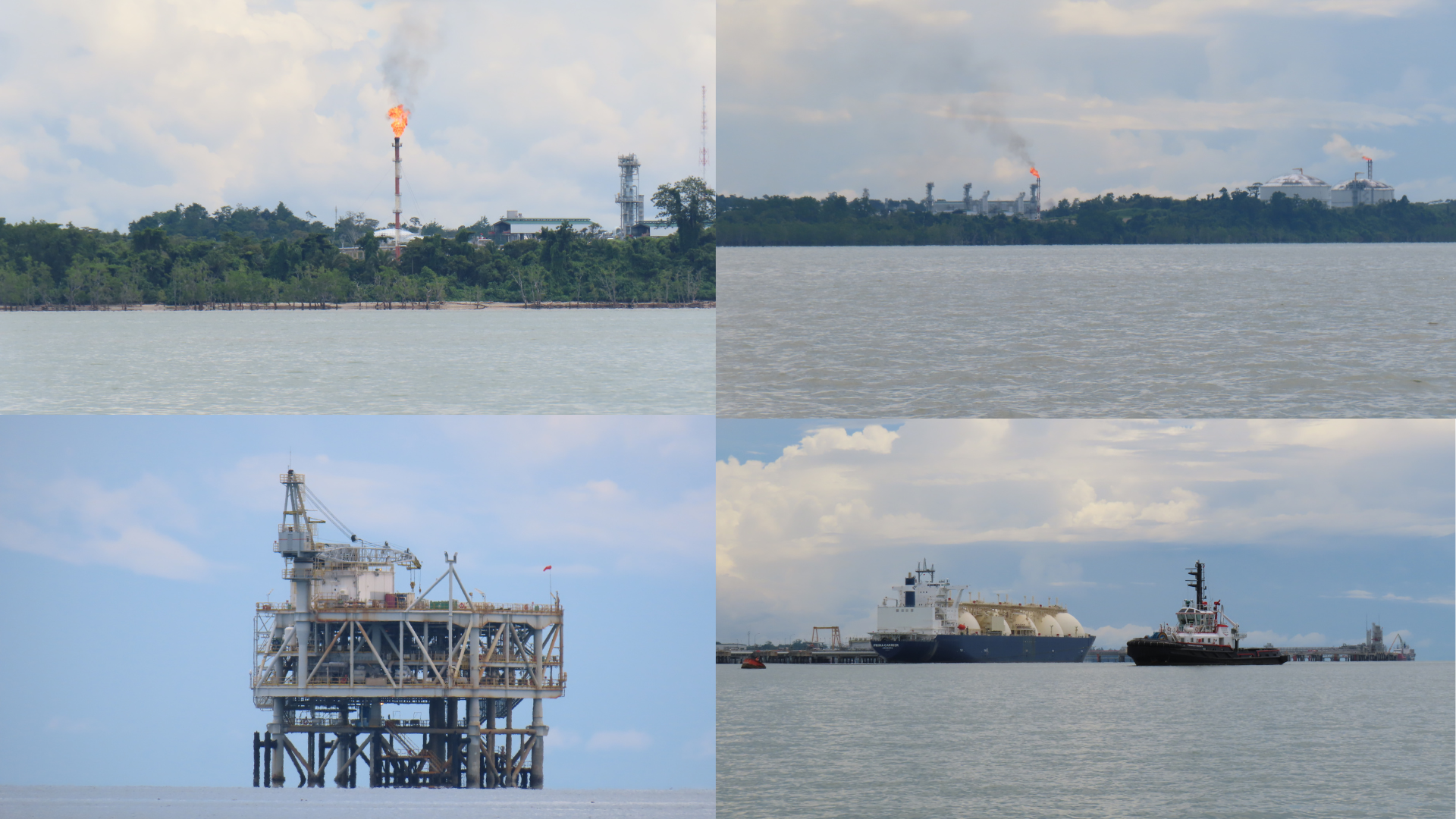
Nevertheless, expansion plans for the Tangguh LNG—Indonesia’s largest gas production hub (with an annual LNG production capacity of approximately 11.4 million tons from three liquefaction trains)—are still proceeding. One such plan is the UCC (the Tangguh Ubadari, CCUS, Compression) project, scheduled to commence production and operation in 2028. It consists of the new development of the Ubadari Gas Field, CCUS (Carbon Capture, Utilization, and Storage) for EGR (Enhanced Gas Recovery) at the currently producing Vorwata gas field, and the onshore compressors.[3] Furthermore, the expansion of the fourth train of gas liquefaction facilities at Tangguh and its CCUS component are designated as one of the large-scale oil and gas priority projects during the term of current President Prabowo Subianto.[4]
The Tangguh LNG expansion plans prolong the use of fossil fuels and worsen the climate crisis. To prevent disasters like those on Sumatra from recurring in the future, these expansion plans must be halted. The transition to clean, sustainable renewable energy based on community needs must proceed without delay.
Tangguh LNG is a project pursued by a consortium led by BP plc as operator and largest investor (40.22%) under a production sharing contract extending until the end of 2055.[5] Approximately 46% of the consortium’s interests are held by six Japanese companies[6] and Japan Organization for Metals and Energy Security (JOGMEC). JBIC[7] and NEXI[8] provided support in 2006 and 2007, respectively, for the gas field concession and gas liquefaction facilities (Train 1 and Train 2) located in Berau Gulf, and again in 2016 for the additional development and production of the gas field block and the expansion of the existing gas liquefaction facilities (Train 3)[9][10]. Kansai Electric Power Co., Inc. also purchases gas from this project (1 million tons per year).
Given the deep involvement of Japanese public and private entities in the implementation of the Tangguh LNG, it goes without saying that the roles and responsibilities of Japan’s public financial institutions, JBIC and NEXI, in determining the feasibility of the expansion plan—whether it be the UCC project or the fourth train expansion—are significant. Therefore, we strongly urge JBIC and NEXI to thoroughly examine the reasons for rejecting support for the Tangguh LNG expansion plans as outlined below and to refuse to consider supporting any expansion plan.
Reasons Why JBIC and NEXI Must Not Support the Tangguh LNG Expansion Plans
1. Environmental, Social, and Human Rights Impacts on Indigenous Communities Since the Early Phase of the Project[11][12]
Construction of the Tangguh LNG, located in Bintuni Bay, West Papua Province, began in 2005. However, the project proceeded from the early 2000s without meaningful consultation with or participation from local communities. For example, the Environmental Impact Assessment (EIA) was conducted without community involvement. As a result, ecologically important coastal mangrove forests vital to the community have been damaged, and community activities such as fishing around the gas fields have been restricted.
In addition, the land acquisition associated with the Tangguh LNG forced indigenous communities who had traditionally sustained their way of life in this area to relocate. As the Tangguh LNG site was fenced off, indigenous communities lost access to natural resources like sago palms and their hunting grounds.
Some indigenous communities have expressed dissatisfaction as the promise of priority employment for local communities has not been fully fulfilled, and there are also reports that the company’s grievance mechanism is not functioning adequately.
These situations may violate provisions related to social acceptability, involuntary resettlement, indigenous peoples, and EIA in the environmental guidelines of JBIC[13] and NEXI[14], which have each provided two rounds of support to Tangguh LNG.
2. Suppression of Civil Society Space in Papua
The Tangguh LNG was developed and continues to operate in an area with long-standing conflict and self-determination movements. The struggle for land rights and natural resources is a key aspect of the ongoing conflict in Papua. Repressive measures and violence have been used to silence the voices of the Papuan people, the media, activists, and human rights defenders.[15]
As the Tangguh LNG got labeled a National Vital Object (OBVITNAS)[16], the Indonesian government has increasingly deployed military personnel across West Papua, particularly to secure areas which have natural resources, including mining and fossil gas. While it is framed as a way to protect vital projects, the presence of armed forces on the ground can intensify risks of shrinking civic space, infringing on Indigenous rights, and deepening the potential for human rights abuses.[17]
This situation demonstrates how difficult it is to comply with the provisions regarding meaningful consultation related to social acceptability, involuntary resettlement, indigenous peoples, and EIA in the environmental guidelines of JBIC[18] and NEXI[19].
3. Inconsistent with the Paris Agreement’s 1.5°C Goal
The new development of the Ubadari gas field, which reached Final Investment Decision (FID) in 2024[20], is inconsistent with the Paris Agreement’s 1.5°C goal. The International Energy Agency (IEA) had already indicated in 2021 that achieving net-zero GHG emissions by 2050 leaves no room for new fossil fuel extraction projects.[21] This conclusion was reiterated in its 2023 report, “Net Zero Roadmap: A Global Pathway to Keep the 1.5 °C Goal in Reach.”[22]
Regarding JBIC, in a recent research report[23] analyzing all fossil fuel projects involving JBIC from 1999 to 2024, even if it provides no new financing for fossil-fuel projects, JBIC’s “financed emissions" —the GHG emissions associated with its lending and investment activities— are already inconsistent with the level of reductions required to be in alignment with the IPCC’s (the Intergovernmental Panel on Climate Change) 2030 targets to achieve the 1.5°C target. In other words, if JBIC supports the Tangguh LNG expansion plans, it will further distance itself from a pathway consistent with the Paris Agreement’s 1.5°C goal.
4. Failure to Comply with G7 Commitment
At the G7 Elmau Summit in 2022, the Japanese government committed “to end new direct public support for the international unabated fossil fuel energy sector by the end of 2022, except in limited circumstances clearly defined by each country consistent with a 1.5°C warming limit and the goals of the Paris Agreement.” (G7 Commitment)[24] However, according to analysis by Climate Action Tracker[25], the Indonesian government’s policies and action promoting fossil fuel gas as a “transition fuel” are not consistent with the 1.5°C goal.
In addition, public support for the Tangguh LNG expansion plans is inconsistent with the G7 commitment because the plans themselves can be characterized as having “no abated measures” in place, while there is no established effective abatement for the fossil energy sector to date. The CCUS aimed at EGR under the UCC project will only lead to higher gas production and continuation of fossil fuel use, thereby merely bolstering fossil fuel production. Even the Eligibility Criteria for Climate Change Mitigation Projects outlined in the Sector Understanding on Export Credits for Climate Change (Annex I) of the OECD Arrangement on Officially Supported Export Credits[26] explicitly state that “Utilization of CO 2 for fossil fuel related activities such as enhanced oil recovery is not eligible” for CCUS. This means that even under the OECD Arrangement, CCUS for EGR is recognized as not contributing to climate change mitigation.
5. CCUS is a False Solution
CCS/CCUS has already been identified as having numerous problems[27], including significant technical and financial challenges, environmental and health risks, energy inefficiency, and issues with long-term storage. Fundamentally, CCS/CCUS is a technology premised on greenhouse gas emissions, leading to the prolonged use of fossil fuels. CCS/CCUS does not capture all CO2; actual capture rates remain around 60-70%.[28] Moreover, only CO2 is captured. Other potent GHGs, such as methane—which has over 20 times the global warming potential of CO2 at a conservative estimate—are not captured.
According to the Tangguh LNG Expansion Plan Environmental Impact Assessment Report (EIA) Addendum (2024)[29], the operation of Tangguh LNG’s gas liquefaction facilities (Trains 1-3) emits 8 MtCO2 annually. Meanwhile, the EGR/CCUS under the UCC project is expected to inject and store approximately 30 MtCO2 of CO2 by 2035. This clearly indicates that not all CO2 emissions associated with Tangguh LNG will be captured. If operations continue based on the production sharing contract until 2055, it becomes evident how small the emission reduction effect of CCUS under the UCC project is compared to the long-term emissions.
6. Prolonged Fossil Fuel Dependence and Delayed Energy Transition in Indonesia
Tangguh LNG’s three liquefaction trains produce the largest volume of LNG in Indonesia, accounting for approximately one-third of the country’s gas production. About 33% of its annual output is for domestic consumption.[30] It has primarily supplied 14 gas-fired power plants across Indonesia via Floating Storage and Regasification Units (FSRUs). Looking ahead, Tanggu LNG is expected to supply fuel to at least five additional gas-fired power plants currently in the planning stages.[31]
The development of the Ubadari gas field and the fourth train of the gas liquefaction facility, which will enable increased and prolonged gas production, is closely linked to the continuation of operations at existing gas-fired power plants and the commissioning of new gas-fired power plants within Indonesia. Considering the production sharing contract extending to 2055, pushing forward with the Tangguh LNG expansion plans will undoubtedly prolong Indonesia’s dependence on fossil fuel gas and lock in massive GHG emissions in Indonesia for the long term. Further, CCUS serves as a false justification for continuing and increasing LNG use, despite being primarily used to boost gas production and offering extremely limited GHG emission reduction effects. This hinders Indonesia’s rapid transition to renewable energy.
Signatories:
Wahana Lingkungan Hidup Indonesia (WALHI/Friends of the Earth Indonesia)
WALHI Papua
Trend Asia
GREENPEACE Indonesia
Jaringan Advokasi Tambang (JATAM)
KRuHA (People’s Coalition for the RIght to Water)
Friends of the Earth Japan
Japan Center for a Sustainable Environment and Society (JACSES)
Kiko Network
Mekong Watch
Cc:
Mr. Katsuya Nakanishi, Representative Director, President and Chief Executive Officer, Mitsubishi Corporation
Mr. Takayuki Ueda, Representative Director, President & CEO, INPEX CORPORATION
Mr. Yasuhiko Oshida, President and CEO, ENEOS Xplora Inc.
Mr. Kenichi Hori, President and Chief Executive Officer, MITSUI & CO., LTD.
Mr. Kosuke Uemura, Representative Director, President & CEO, Sojitz Corporation
Mr. Shingo Ueno, Representative Director, President and Chief Executive Officer, SUMITOMO CORPORATION
Mr. Ichiro Takahara, Chairman & CEO, Japan Organization for Metals and Energy Security (JOGMEC)
Mr. Hironori Kamezawa, Member of the Board of Directors, President & Group CEO, Mitsubishi UFJ Financial Group, Inc.
Mr. Toru Nakashima, Director President and Group CEO, Sumitomo Mitsui Financial Group, Inc.
Mr. Masahiro Kihara, President & Group CEO, Mizuho Financial Group, Inc.
Mr. Masahiro Koike, President, Tokio Marine Holdings, Inc.
Mr. Mikio Okumura, Group CEO, Director, President and Representative Executive Officer, Sompo Holdings, Inc.
Mr. Shinichiro Funabiki, Representative Director, President & CEO, MS&AD Insurance Group Holdings, Inc.
Contact:
Friends of the Earth Japan
Add: 1-21-9 Komone, Itabashi-ku, Tokyo, Japan 173-0037
Email: hatae@foejapan.org
Tel: +81 3 6909 5983
[1] https://www.nexi.go.jp/en/environment/a/202601071015.html
[2] https://gis.bnpb.go.id/bansorsumatera2025/
[3] https://www.mitsubishicorp.com/jp/en/news/release/2024/20241122001.html
[4] https://www.cnbcindonesia.com/news/20250218154525-4-611614/megaproyek-migas-ini-diusulkan-jalan-di-era-pemerintahan-prabowo
[5] https://www.inpex.com/english/business/project/tangguh.html
[6] Mitsubishi Corporation, INPEX CORPORATION, ENEOS Xplora Inc., LNG JAPAN CORPORATION (a joint-subsidiary of Sojitz Corporation and Sumitomo Corporation), MITSUI & CO., LTD.
[7] https://www.jbic.go.jp/ja/information/press/press-2006/0802-6019.html
[8] https://www.nexi.go.jp/en/topics/newsrelease/2016111401.html
[9] https://www.jbic.go.jp/en/information/press/press-2016/0705-49355.html
[10] Same as footnote 8
[11] https://www.walhi.or.id/walhi-tuntut-jepang-akhiri-pendanaan-terhadap-proyek-gas-fosil-yang-menimbulkan-bencana-dan-kerusakan
[12] https://re-course.org/newsupdates/tangguh-lng/
[13] https://www.jbic.go.jp/en/business-areas/environment/confirm.html
[14] https://www.nexi.go.jp/en/environment/social.html
[15] https://humanrightsmonitor.org/case/attack-on-jubi-office-raises-alarms-over-press-freedom-in-papua/, https://globalpressjournal.com/asia/indonesia/journalists-face-new-restrictions-indonesia/, https://monitor.civicus.org/explore/indonesia-civic-space-regresses-with-targeting-of-activists-brutal-crackdown-on-protests-and-problematic-law-revisions/
[16] https://jdih.esdm.go.id/common/dokumen-external/Kepmen%20ESDM%20No.%20270.K-HK.02-MEM.S-2022.pdf
[17] https://ylbhi.or.id/bibliografi/laporan/papua-dalam-cengkraman-militer/
[18] Same as footnote 13
[19] Same as footnote 14
[20] Same as footnote 3
[21] https://www.iea.org/reports/net-zero-by-2050
[22] https://www.iea.org/reports/net-zero-roadmap-a-global-pathway-to-keep-the-15-c-goal-in-reach
[23] https://foejapan.org/en/issue/20251105/26047/
[24] https://www.mofa.go.jp/mofaj/files/100364051.pdf
[25] https://climateactiontracker.org/countries/indonesia/policies-action/
[26] https://legalinstruments.oecd.org/en/instruments/OECD-LEGAL-5005
[27] https://foejapan.org/en/issue/20240508/17466/
[29] https://www.nexi.go.jp/environment/info/pdf/25-034_EIA_1.pdf
[30] https://www.bp.com/content/dam/bp/country-sites/id_id/indonesia/home/who-we-are/bp%20Company%20Profile%20-%202025%20(ENG).pdf
[31] https://jdih.esdm.go.id/dokumen/download?id=2025kmesdm188k.pdf