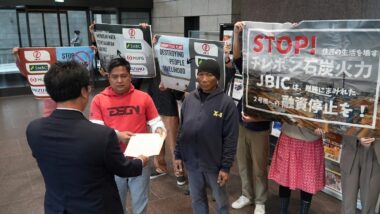
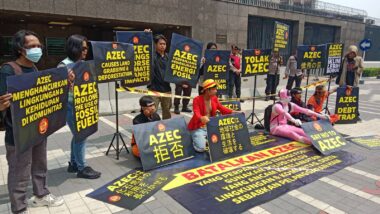
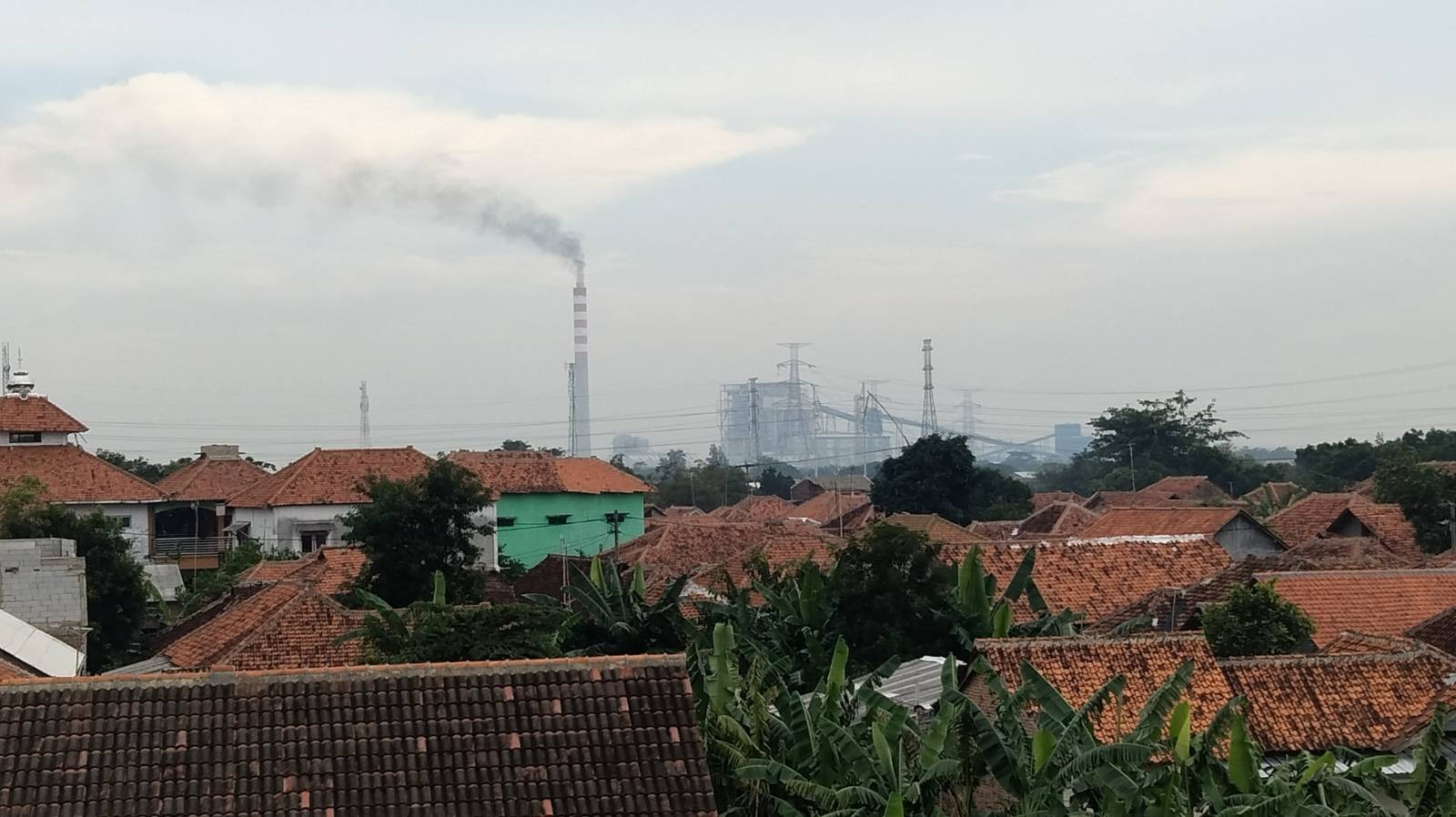
Cirebon Coal-Fired Power Plant in Indonesia: Local Communities' Groups and NGOs Submit an Opinion Letter to the Japan Bank for International Cooperation (JBIC) Regarding its Environmental Monitoring Mission
> PDF is available here (Translation in Japanese is available at here)
(This is a translation by WALHI West Java- The original document was written in Indonesian.)
Re: Opinion Letter on Your Bank’s Environmental Monitoring Mission for the Cirebon Coal-Fired Power Plant Project, West Java, Indonesia
December 2, 2025
Mr. Nobumitsu Hayashi, Governor, Japan Bank for International Cooperation (JBIC)
We understand that your bank plans to conduct an environmental monitoring mission related to the Cirebon coal-fired power plant project in West Java, Indonesia, in December 2025. We have also been informed by FoE Japan that, as in 2023, your bank reached out to us regarding an opportunity for an exchange of views in the city of Cirebon. However, this time, only a single scheduling option was presented by your bank, which makes it difficult for many of us to participate. For this reason, and in light of the additional points below, we have decided to decline your inquiry.
We are obliged to inquire as to the true purpose of this so-called “exchange of views,” or of the meeting itself. Including the meeting held with your bank during our representatives’ visit to Japan, none of the numerous meetings we have had with your bank to date have provided us with any meaningful or beneficial outcomes.
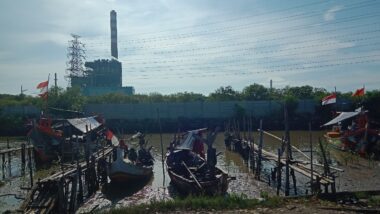
We have repeatedly informed your bank that the construction and operation of Units 1 and 2 of the Cirebon coal-fired power plants (Cirebon 1 and 2) have resulted in decreased fish catches and have severely impacted the livelihoods of small-scale fishers who have traditionally conducted fishing without the use of boats in the shallow coastal waters. We have also conveyed our concerns regarding the rise in reported cases of respiratory and other health problems among residents living near the project site, and the growing apprehension over air pollution. Considering the hardships faced by small-scale coastal fishers and the surrounding communities, we have on numerous occasions urged your bank to stop its financing for the project. However, our earnest appeals and requests have not led to any meaningful improvements on the ground, and we have begun to feel that your bank may not believe our reports at all. A recent report issued by Indonesian civil society organizations, entitled “Toxic 20 (the 20 Most Dangerous Coal-Fired Power Plants in Indonesia)”[1], concludes—based on a variety of indicators related to health, economic, and social impacts etc.—that the Cirebon project ranks as the third most “toxic” coal-fired power plant in the country. In light of this newly available data, we respectfully request that your bank independently verify that the information we have conveyed to you over the years is not unfounded, and that you make the results of such verification publicly available.
We have, each time, informed your bank that the CSR (Corporate Social Responsibility) programs—which you frequently cite as solutions—do not in fact resolve the serious problems faced by communities whose livelihoods and health have been adversely affected. We have also questioned for whom these CSR initiatives are truly intended. However, to our understanding, neither the project operator nor the lending consortium, including your bank, has ever conducted an independent assessment to determine whether these CSR measures are genuinely effective in addressing the issues experienced by the affected communities.
Regarding the bribery case associated with the Cirebon 2 project, since 2019—when the former Regent of Cirebon and a former senior executive of Hyundai Engineering & Construction were designated as suspects by the Indonesian Corruption Eradication Commission (KPK), and when two former senior executives of CEPR, the project operator, were subjected to a travel ban prohibiting them from leaving Indonesia—we have consistently called on you to promptly take measures to suspend your loan disbursement, to cancel the unutilized portion of loans, and to enforce mandatory prepayment of loans that you have disbursed. Nevertheless, your bank has repeatedly stated only that it is “closely monitoring the situation” and that it will “take appropriate actions in accordance with the loan agreement based on the facts to be established.” Even after the guilty verdict against the former Regent of Cirebon—covering, among other things, the bribery related to the Cirebon 2 project—was finalized in April 2024,[2] your bank has not required CEPR to undertake mandatory prepayment of loans. Instead, you continue to be involved in the Cirebon 2 project, through which corrupt large corporations and local politicians have unjustly amassed enormous wealth.
We have also consistently questioned the necessity of this project itself, given the high reserve margin in the Java-Bali power grid. The previous RUPTL (2021–2030) projected a reserve margin of 40–60%, and the RUPTL published in May of this year (2025–2034)[3] anticipates a reserve margin of 33–44% over the next decade. Once again, we have no information indicating that the lending consortium, including your bank, has independently assessed the necessity of this project.
Recently, we learned from AZEC materials[4] that, regarding Cirebon 2, the introduction of so-called “false solutions,” such as biomass/ammonia co-firing and CCS/CCUS, is beginning to be considered. Our candid reaction was simply, “Here we go again.” For both Cirebon 1 and 2, the local communities were never informed in advance about these plans. We are deeply frustrated by the fact that decisions are being made and implemented as if the affected local communities do not exist at all.
The same applies to the process using the ADB-led Energy Transition Mechanism (ETM) in Cirebon 1.[5] Both Cirebon 1 and 2 should be retired at the earliest opportunity, taking into account the severe impacts they have had on local residents’ livelihoods and health. Terms such as “repurposing” or “low-carbon” are no longer relevant—or welcome—for coal-fired power plants in our communities.
From the above perspectives, our consistent demand to your bank remains the same: to promptly take measures to enforce mandatory prepayment of loans that you have disbursed in relation to the Cirebon project. Based on our experience to date, we believe that your bank’s environmental monitoring missions have done nothing to genuinely address the issues faced by local communities, which have been continuously affected by this project since the construction of Cirebon 1 in 2007 till today after the commencement of operation of Cirebon 2. We hereby explicitly refuse to participate in your mission process, which would serve to legitimize your continued involvement in this project.
We respectfully request your understanding and consideration on this matter.
Sincerely,
SIGNATORIES:
Rapel (Rakyat Penyelamat Lingkungan)
KARBON (KOALISI RAKYAT BERSIHKAN CIREBON)
WALHI West Java
Wahana Lingkungan Hidup Indonesia
Contact:
WALHI West Java
Address: Jalan Simphoni No. 29, Kel. Turangga, Kec. Lengkong, Kota Bandung, Jawa Barat 40264, Indonesia
TEL: +62 22 63175011
Email: walhijabar@gmail.com
[1] https://toxic20.org/
[2] https://sipp2.pn-bandung.go.id/index.php/detil_perkara
[3] https://web.pln.co.id/stakeholder/ruptl
[4] https://www.meti.go.jp/press/2025/10/20251017001/20251017001-i.pdf
[5] https://www.adb.org/projects/56294-001/main