Hanwa CO., LTD. Responds to a Second Questionnaire from Japanese and Indonesian NGOs Regarding Biomass Fuel Production; Still No Expressing Views on the Impact on Local Residents
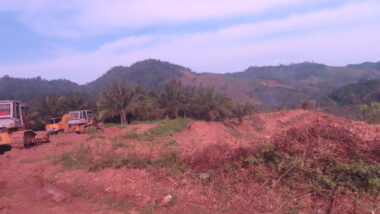
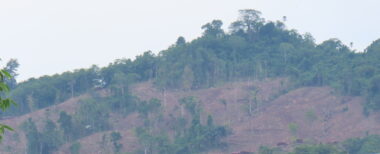
On May 25, 2026, Hanwa CO., LTD. (Hanwa) provided a response to the questionnaire submitted in January of that year by five Japanese and Indonesian environmental NGOs. In the questionnaire, the NGOs sought the disclosure of environmental impact assessments and the company’s views on the effects of wood pellet production on local residents; however, they were unable to obtain clear answers to many of the questions. As Hanwa produces and imports wood pellets derived from natural forests in Gorontalo Province, Indonesia, these organizations are calling for a halt to the import of wood pellets from Indonesia to prevent deforestation.
Background Information
In recent years, “Industrial Plantation Forests for Energy (HTE: Hutan Tanaman Energi)”—aimed at producing wood pellets used as a main fuel in biomass power plants in Japan—have been rapidly expanding in Indonesia, covering an area of approximately 1.3 million hectares.
As a result, the logging of natural forests and their conversion into monoculture plantations are proceeding, and local NGOs have reported serious impacts on biodiversity and the lives of local residents, such as increased flood risks and loss of access to forests and farmland.
In particular, wood pellets produced in Gorontalo Province in northern Sulawesi are exported to countries such as Japan and South Korea. In Japan, they are imported by trading companies such as Hanwa.
FoE Japan and four Indonesian environmental NGOs have requested that Hanwa halt imports of wood pellets to prevent further destruction of Indonesia’s natural forests, as well as sent their first letter and questionnaire on November 6, 2025.
Although they received a response from the company on December 11 of that year, they were unable to confirm any clear answers—particularly regarding their views on the environmental impact assessment and the effects on people living near the wood pellet production sites—so they sent a second questionnaire on January 21, 2026.
The table below lists all the questions in a second questionnaire and the responses they received on May 25.
Comparison Table of Questions and Responses
| Questions (January 21, 2026) | Excerpt from Responses from Hanwa (May 25, 2026) |
| (1) We understand your position to be that “timber derived from clear-cutting natural forests and converting them to gamal plantations” has the same meaning as “sustainably sourced timber.” Is this correct? | “We view the reforestation and management of land where logging or alterations have occurred in the past as Gamal plantations, in accordance with local laws and regulations, as a part of our sustainability efforts.” |
| (2) We also understand that you operate gamal plantations, but it has nothing to do with the current sourced raw materials. Is this correct? | “Logging and afforestation / reforestation (in Gamal) have been conducted in a planned manner aligned with market trends and its growth conditions based on applicable laws, regulations and management plans while leveraging the existing forest resources in the relevant areas.” |
| (3) Although you answered that you checked secondary forests, these forests are still natural forests. We recognise that clear-cutting and converting this area to gamal plantations causes deforestation. Could you please tell us your opinions based on our recognition? | “~ we recognized that logging and forest alteration in these areas had already taken place before PT BTL and PT IGL’ s involvement, that is, prior to the HGU was granted.” “We view the reforestation and management of land where logging or alterations have occurred in the past as Gamal plantations, in accordance with local laws and regulations, as a part of our sustainability efforts” |
| (4) When did you start gamal plantations? Do you have any plan to start importing and selling the gamal as biomass energy? You already told us it is possible to harvest for about 4 years. Or is this “Gamal” not being considered as an imported fuel? | – |
| (5)Although you mentioned “We confirm that PT BJA, PT BTL, and PT IGL are in full compliance with all applicable laws and regulations”, could you please let us know specifically about confirmed laws and regulations? | ”~ we comply with applicable laws and regulations and operate with a strong emphasis on transparency after obtaining the necessary government permits and approvals.” ”~ PT PBL and PT IGL supplying raw materials to PT Biomass Jaya Abadi (PT BJA) as our wood pellet suppliers are conducting their operations after having obtained some necessary right to use business lands / cultivation rights (HGU) from regional office of Indonesian National Land Agency (BPN) at Gorontalo.” ”We verify compliance with all applicable laws and regulations related to our business.” ”~ audits, certifications, and on-site surveys conducted by relevant Indonesian authorities and independent certification bodies have confirmed that we comply with all legal requirements, including those related to land rights, investment, forest resource utilization, and certification requirements.” |
| (6) Although you told us “The operations of PT BTL and PT IGL hold Forest Product Legality Verification (VLHH) certificates.”, you are not able to confirm the “sustainability” of raw materials. Is our understanding correct? | – |
| (7) In addition, you also answered “We source wood pellets only from concession areas where assessments have been conducted in accordance with the requirements of Indonesia’s Environmental Impact Assessment (AMDAL) system.”, however, there are areas where AMDAL has not been conducted or is not applicable, in the concession areas operated by PT. BTL and PT.IGL. Is our understanding correct? | “~ an Environmental Impact Assessment (EIA/AMDAL) is conducted appropriately in accordance with applicable laws and regulations prior to the start of operations. This assessment has been reviewed and approved by the environmental authorities with jurisdiction over the target area, and we have confirmed that all necessary environmental permits and approvals have been obtained prior to the start of operations.” |
| (8) Is it also correct to understand that PT. BTL and PT. IGL are conducting logging operations in those areas, but that these materials are not included in your company’s procurement? | – |
| (9) When is the EIA process implemented? Which organization approved the EIA? | – |
| (10) Regarding step 6 of the EIA process, “Public Consultation and Approval,” there is no information provided about “local residents” or “stakeholders.” Specifically, when and to whom (e.g., officials from state, prefecture, county, village, or other local governments) was this consultation conducted? | ”~ public consultations are conducted in accordance with relevant laws and regulations as an important component of the environmental approval process. In Indonesia, these procedures involve not only provincial and regency-level administrative authorities but also representatives from the sub-district and village levels.” |
| (11) The EIA is made publicly available during the scoping and draft stages, with a period set for soliciting comments from stakeholders. Did this EIA follow such steps? If so, when was the public comment period? | – |
| (12) During the comment period from the above stakeholders, were any information sessions held for stakeholders? | – |
| (13) The five organizations, including the Indonesian NGO, are interested in the results of the environmental impact assessment. Is the EIA report available to stakeholders, including local residents? Is it possible to share a copy with us? *Indonesian is perfectly acceptable. | ”While the details of the environmental impact assessment results, including these consultation records, are not generally made public, dialogue with stakeholders is a critical element in obtaining permits and approvals for this large-scale project.” |
| (14) Are the results of the environmental monitoring conducted every six months disclosed to stakeholders, including local residents? Also, would it be possible to share a copy of the most recent environmental monitoring results/report with us? | ”~ regarding the periodic monitoring and reporting of environmental impact assessments conducted by both companies in accordance with Indonesian laws and regulations, there is a system that allows stakeholders, including citizens, to participate and observe the process.” |
| (15) (the same question as the above)The five organizations, including the Indonesian NGO, are interested in the results of the environmental impact assessment. Is the EIA report available to stakeholders, including local residents? Is it possible to share a copy with us? *Indonesian is perfectly acceptable. | – |
| (16) Although you answered “PT BTL and PT IGL prioritize the principle of Free, Prior, and Informed Consent (FPIC). ~~~ including those located downstream of the concession”, could you please let us know the name of areas and villages? | – |
| (17) You also mentioned “We have conducted stakeholder mapping, participatory mapping, focus group discussions, and detailed interviews with relevant key stakeholders in multiple villages,” when have those activities been done? Was it conducted as a separate process from the EIA or as a part of the EIA? | – |
| (18) If the Indonesian companies claim to have gotten FPIC with grassroots communities, is there a way for us to create documentation based on community input in order to object to a company’s logging rights? If so, could you please let us know about how to do it? | “Procedures and related documents regarding FPIC (Free, Prior, and Informed Consent), as well as records of dialogues, opinions, and exchanges with the community, are prepared and managed by PT BJA, PT BTL, and PT IGL, and are properly documented as official records for obtaining permits and approvals.” |
| (19) We request that your company once again let us know your perspective on the impacts on the local community and residents. As our request letter and reference materials on November 6th, we revealed that the project has hindered land and forest use and some residents have rejected the project from the outset due to concerns about flooding and landslides caused by deforestation, as well as fears of losing access to forests essential for their livelihoods as results of interviews conducted with local residents by FoE Japan and Indonesian NGOs. | ”PT BTL and PT IGL strive to build ongoing relationships with local communities throughout the year through various initiatives in healthcare, education, and socio-cultural activities, while also actively promoting employment for residents of Pohuwato District and Gorontalo Province” |