Statement and a Third Questionnaire to Hanwa Co., Ltd. -Clearing Natural Forests or Converting Them into Plantations to Use as Raw Material for Wood Pellets Is Contrary to “Sustainability”
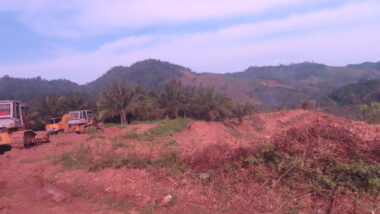
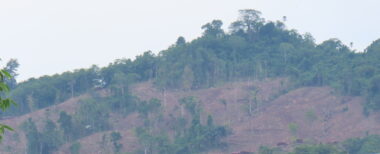
In recent years, “Industrial Plantation Forests for Energy (HTE: Hutan Tanaman Energi),” which aims to produce wood pellets used as fuel for biomass power plants, has been rapidly expanding in Indonesia, covering an area of approximately 1.3 million hectares. As a result, the logging of natural forests and their conversion into monoculture plantations are being promoted, posing a serious threat to biodiversity and the livelihoods of local residents due to increased flood risks and the loss of access to forests and farmland.
Wood pellets produced in Gorontalo Province in northern Sulawesi, Indonesia, are exported to countries such as Japan and South Korea, and in Japan, they are imported by trading companies such as Hanwa Co., Ltd. (Hanwa).
On November 6, 2025, FoE Japan and four Indonesian environmental NGOs requested that Hanwa halt imports of wood pellets to prevent further destruction of Indonesia’s natural forests. As of now, we also have sent two questionnaires to the company (the first on November 6, 2025, and the second on January 21, 2026). Although we have received responses from the company, many critical points remain unclear.
We have now sent FoE Japan’s views on the response received from the company, along with a third questionnaire to the company.
FoE Japan’s View on the Responses Received as of Now
Based on the responses received to our two previous questionnaires, we feel compelled to once again raise significant concerns regarding three key points: the importance of natural forests or naturally regenerated forests (*), the concept of sustainability and consideration for local residents and others in the vicinity of the project site.
* “Naturally regenerated forests” refer to forests that have naturally regenerated following human disturbances, such as logging, and are in the process of recovery. The difference from “natural forests” is that the latter include forests that have fully recovered from natural disturbances such as typhoons and are in a stable state.
Tropical forests are treasure troves of biodiversity. Halting the loss and degradation of these tropical forests is essential for contributing to biodiversity conservation and climate change mitigation, and is therefore the first step that must be taken to ensure sustainability.
An Indonesian NGO points out that the forests from which your company sources wood pellets—even if classified as “logged” under the land classification system—are “still primary forests.” These forests should be targeted for protection and conservation; clear-cutting them or converting them into plantation forests for use as raw material for wood pellets constitutes “deforestation and forest degradation.”
For this reason, it is highly misleading to regard clear-cutting and conversion of these natural forests or naturally regenerated forests to create Gamal plantations as “sustainable”. Converting natural forests or naturally regenerated forests into monoculture plantations results in the loss of ecological value—including biodiversity—and causes ecological impacts such as disruption of the water cycle; yet these impacts are being completely ignored.
Furthermore, regarding the impact on the villages and residents surrounding the logging sites, while it is stated that the necessary measures to obtain project permits and approvals have been implemented, there is still a lack of detailed information, making it impossible to review “when, for whom, and what actions were taken.”
In May 2026, protests by local residents against the logging company took place, and there were reports that several residents were unfairly detained by the police. Such incidents suggest that the company may not have adequately explained the situation to residents or fulfilled its promises and agreements with them.
In this regard, we believe that, in accordance with the “Basic Approach to Human Rights” that your company’s human rights policy states it supports and respects, appropriate measures should be taken promptly to ensure that your company does not contribute to human rights violations committed by local authorities or security personnel.
Therefore, regarding the items for which we have not yet received clear answers, as well as any remaining unclear points, we are resubmitting the following questions.
[Follow-up Questions]
(1) Contradictions Regarding the Clear-Cutting of Natural Forests
The clear-cutting of natural forests or naturally regenerated forests contradicts the statement that “it is important to work toward achieving climate goals while taking into account the practical challenges being involved with the energy transition.”
The clear-cutting of natural forests or naturally regenerated forests results in carbon emissions, which cannot be offset or compensated for by measures such as planting Gamal trees. Please let us know your company’s perspective on this contradiction.
(2) Forest Logging and Alteration
“Areas of secondary forest have been identified” (first response), and “logging activities occurred prior to 2013 and 2014, when PT BTL and PT IGL were involved” (second response). However, satellite images from 2000 and 2018 obtained from an Indonesian NGO show no signs of widespread or large-scale clear-cutting, and the area remains in a state of “natural forest or naturally regenerated forest” (References). A comparison of the 2000 and 2018 images suggests that vegetation had, in fact, recovered by 2018. Therefore, the conversion to a Gamal plantation is clear “deforestation.” At this point, ecological impacts—including the loss of ecological value, such as biodiversity, and disruption of the water cycle—have already occurred, which runs counter to “sustainability.” Please provide your company’s views on this matter once again.
(3) Sustainability of Raw Materials
You stated that “we process sustainably sourced timber as raw material” (in your first response); however, “sustainable sourcing” is different from “sourcing raw materials whose sustainability has been verified.” Furthermore, you stated that “both PT BTL and PT IGL have obtained Forest Product Legality Verification (VLHH/SVLK) certificates to verify the legality of forest resources” (second response); however, this also guarantees “legality,” not “sustainability.”
Please provide your views once again on how the “sustainability” of the raw materials your company currently procures is ensured.
(4) Ongoing Dialogue and Consultation with Stakeholders
You stated, “Our biomass business is operated in accordance with our environmental and human rights policies. These policies include compliance with environmental laws and regulations, as well as the efficient use of resources and energy” (first response). The protests by residents against the logging company in May 2026 are believed to have been caused, in part, by insufficient efforts based on your human rights policy, such as dialogue and consultation with relevant stakeholders. Please specify, based on this policy, “when, with whom, and what specific measures your company has implemented or is currently implementing.”
(5) Hanwa Group’s Supply Chain Handbook
The “Hanwa Co., Ltd. Group Supply Chain Handbook” was published in January 2026. Regarding its scope of application, it states that the “intended audience consists primarily of our Group’s suppliers and other business partners (direct and indirect),” but the scope remains vague.
a) Is it correct to understand that the scope of this handbook covers all business partners (direct and indirect), including suppliers?
b) Although the handbook states under (5) Information Disclosure and Protection, in the section titled “Expectations for Business Partners,” that companies should “proactively disclose information useful to stakeholders, including non-financial information (environmental and social aspects),” in our two previous questionnaires, you have not provided evidence demonstrating the securing of FPIC or the results of the Environmental Impact Assessment (AMDAL). To reiterate our request, please let us know: (1) the FPIC procedures and related documents held by PT BJA, PT BTL, and PT IGL, as well as the content of their dialogues with communities and records of those interactions; and (2) the results of the Environmental Impact Assessment (AMDAL) and the most recent environmental monitoring results.
c) Regarding the publication of the handbook on your website, we were able to confirm the Japanese version; however, as in the case of PT BJA, we assume there is also an English version (or a version in the local language) intended for overseas suppliers. Would it be possible for you to disclose the English version?
d) Regarding this handbook, do you have plans to continue promoting its adoption among all business partners and to improve and update its content going forward? While the current version includes provisions on human rights risk assessments and biodiversity risk assessments, it is regrettable that it does not mention: i) a commitment to halting deforestation and forest degradation throughout your entire supply chain, and ii) the implementation of appropriate environmental impact assessments and the disclosure of their results.
(6) The “Private Forest (Hutan Hak)” Designation
Regarding environmental and social considerations as well as legal compliance, you explained that “the Ministry of Environment and Forestry has designated the area as a ‘Private Forest (Hutan Hak)’ for the use of timber and forest products” (first response). As of May 13, 2020, when both companies received the designation, Regulation P.21/MENLHK/SETJEN/KUM.1/4/2019 (*1) regarding Hutan Hak was in effect. Subsequently, this regulation was amended via Permen LHK No. 17 of 2020 (*2) and has now been further amended to Permen LHK No. 9 of 2021 (*3).
Under the current regulation (*3), the eligible entities for Hutan Hak are clearly defined, and it is our understanding that for-profit companies such as PT BTL and PT IGL are not included. Furthermore, since Articles 1 and 2 of the pre-amended regulations (*1) and (*2) stipulate “the realization of community welfare” and “sustainable forest management,” it can be inferred that the system was not intended for companies whose primary purpose is profit.
In light of the above, the fact that PT BTL and PT IGL were designated as Hutan Hak on May 13, 2020, is highly unusual in terms of the system’s purpose and scope, and it raises questions as to what legal basis, under the legal framework, was used for this designation. Please provide your company’s views on this matter, including the legal basis for the designation.
References:
Satellite images of the area surrounding PT. BJA Group’s project site (2000, 2018, 2025)
According to Forest Watch Indonesia (FWI) as one of the Indonesian NGO, satellite images of the area surrounding PT. BTL’s project site from 2000, 2018, and 2025 (Figures 1a–c) show that, in 2000 and 2018—the years around 2014 when the company was granted its land use rights (HGU)—no logging activities covering such a vast area as seen in 2025 were observed. Therefore, it is evident that prior to the implementation of PT. BTL’s large-scale logging operations, “natural forests” or “naturally regenerating forests” remained in place, regardless of whether they had been classified as “logged forests (HBT)” or not.
Consequently, it is believed that the land being logged by PT. BTL under the HGU granted in 2013 and 2014 was “natural forest” or “naturally regenerating forest.”
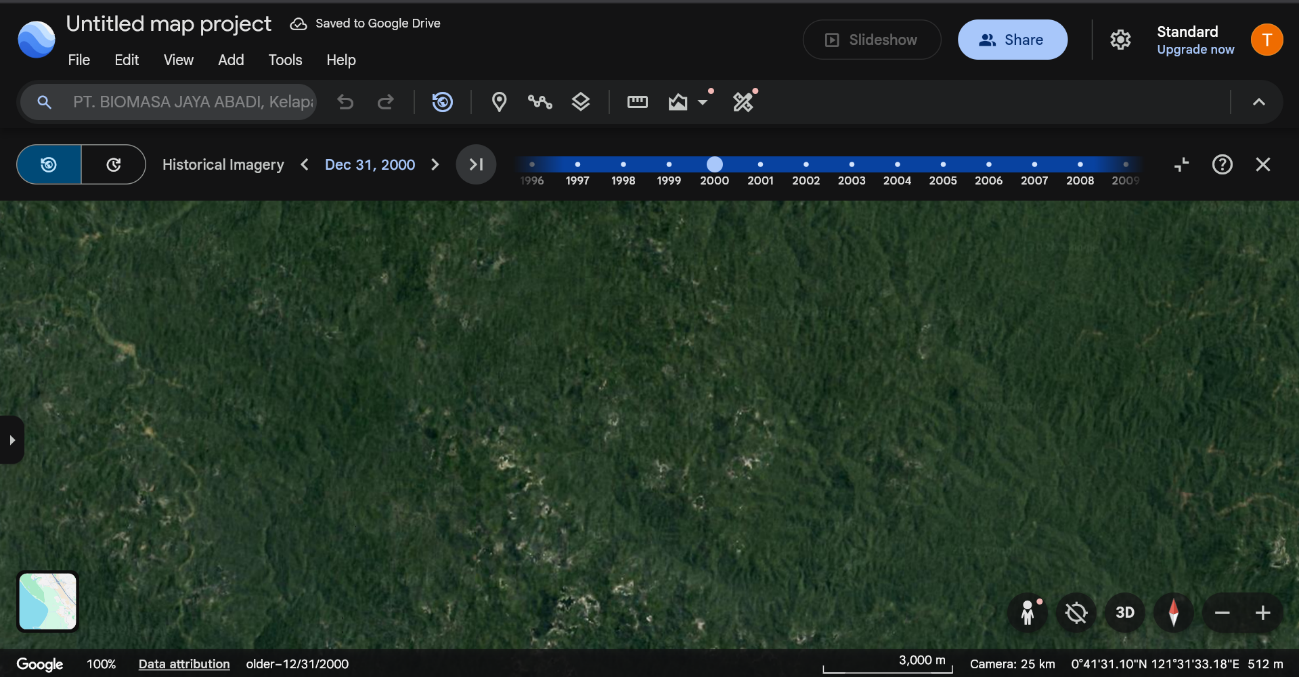
Figure 1(a): Satellite image of forest surrounding PT. BJA’s project site as of December 31, 2000
Coordinates: 0°41’31.10“ N, 121°31’33.18” E, 512 m
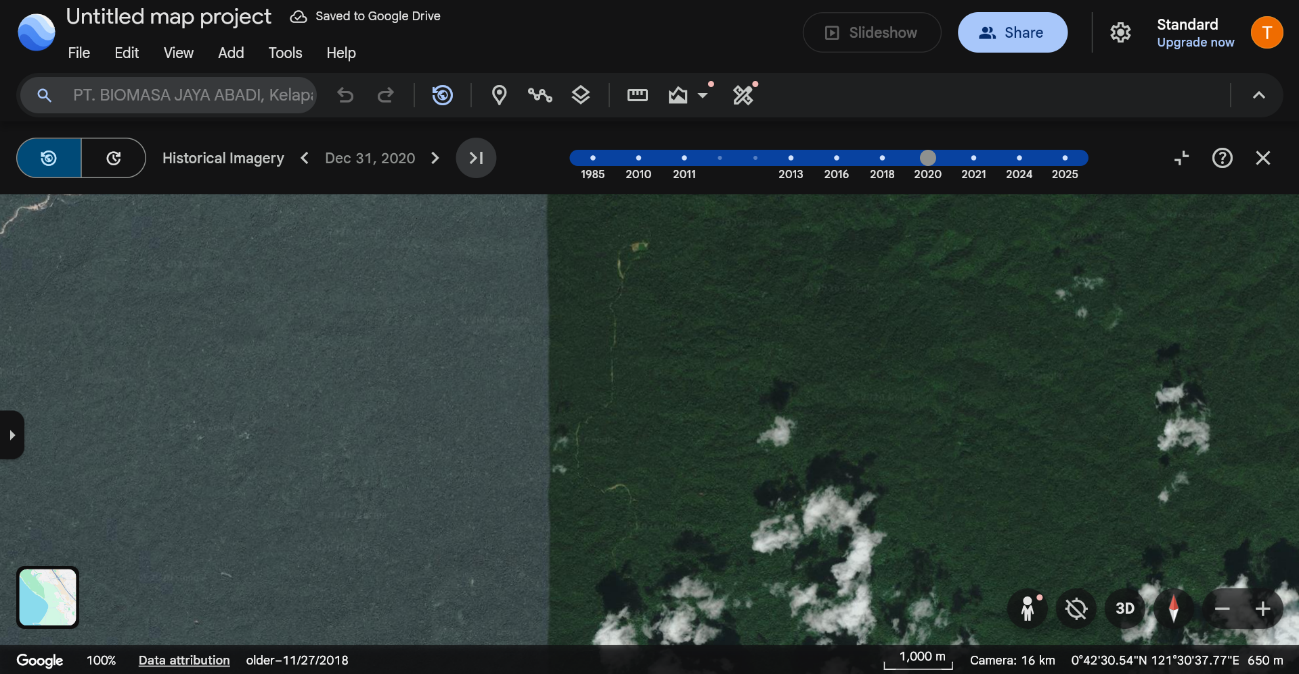
Figure 1(b): Satellite image of forest surrounding PT. BJA’s project site as of November 27, 2018
Coordinates: 0”42’30.54”N 121”30’37.77”E 650m
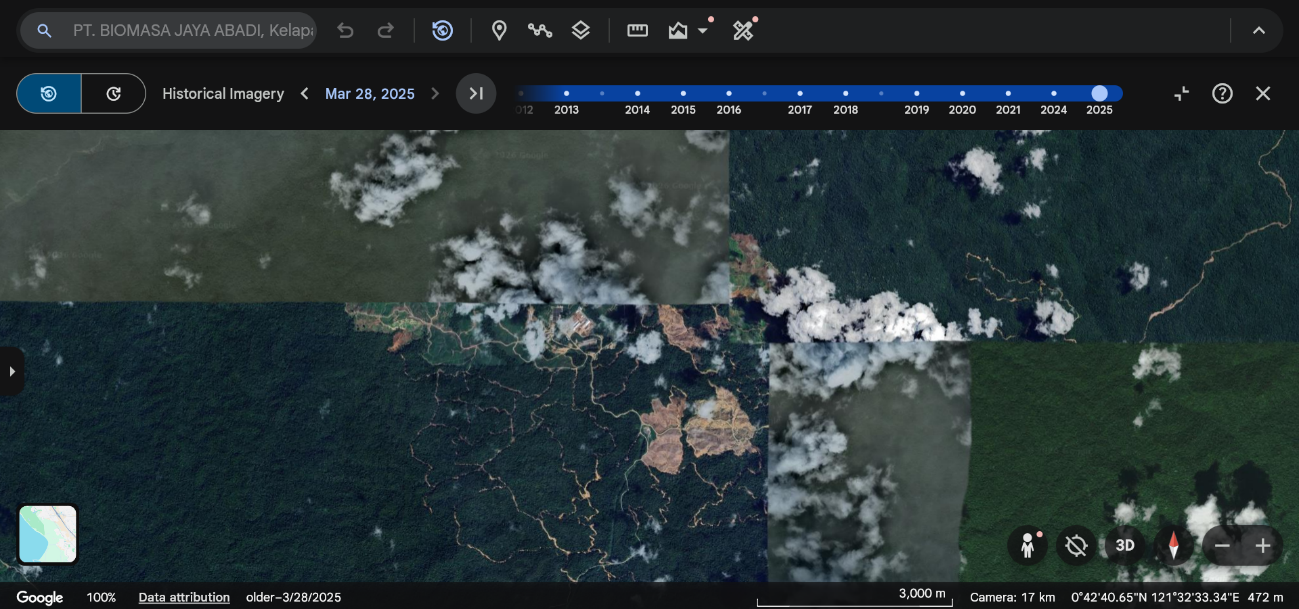
Figure 1(c): Satellite image of forest surrounding PT. BJA’s project site as of March 28, 2025
Coordinates: 0”42’40.65”N 121”32’33.34”E 472m