Severe Livelihood Impacts Caused by Donggi-Senoro LNG Project for Export to Japan: Indonesian Local and Environmental Groups Submit Demands to Japanese Public and Private Sectors for Resolution
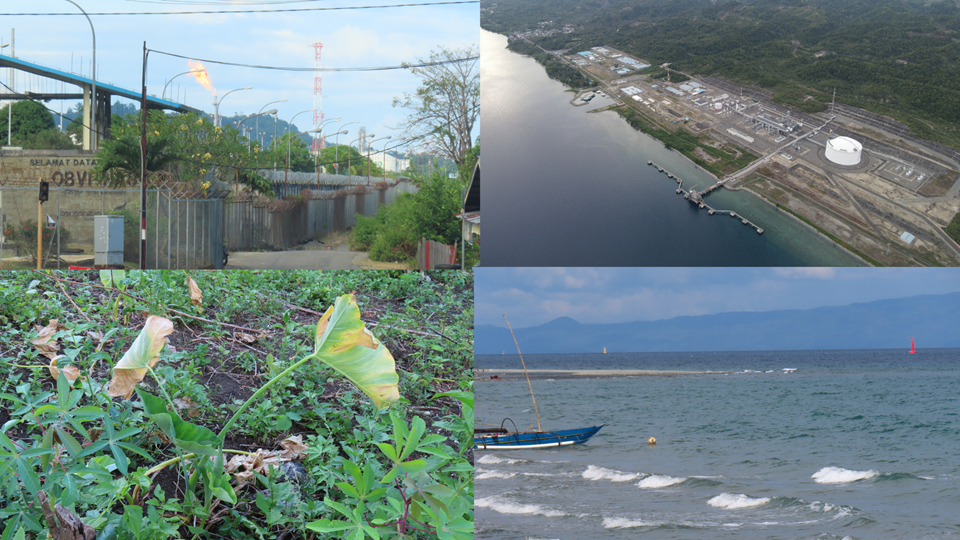
“Before the LNG project started, we lived self-reliant lives. Now, our fishing activities in the sea are restricted by zones the company established, and it has become difficult to get a sufficient harvest from our farmlands on the ground. With no adequate employment opportunities provided either, how are we supposed to survive? Do they expect us to eat stones to live?”
On June 24, 2026, local communities’ groups and environmental organizations from Japan and Indonesia submitted a petition to the Japanese public and private actors involved in the Donggi-Senoro LNG Project (DSLNG), which continues to operate on Sulawesi Island, Indonesia. The petition demands a resolution to the ongoing issues, citing severe damage to local livelihoods, including fishing and agriculture, as well as potential heightened health risks. DSLNG commenced operations in 2015, and Japanese companies purchase approximately 65% of the LNG produced.
The petition was jointly submitted by fishing and farming communities from Uso Village (Batui District, Banggai Regency, Central Sulawesi), a fishing communities from Sinorang Village (South Batui District), and the Indonesian Forum for the Environment (WALHI) Central Sulawesi, among others who have been supporting them.
The petition was addressed to Mitsubishi Corporation (the largest shareholder of the project with an approx. 45% stake), the Japan Bank for International Cooperation (JBIC; wholly owned by the Japanese government) and Nippon Export and Investment Insurance (NEXI; wholly government-funded), which provided financial support (with a total co-financing amount of approx. USD 1.527 billion), as well as Japan’s three mega-banks: MUFG Bank, Sumitomo Mitsui Banking Corporation (SMBC), and Mizuho Bank.
The petition strongly urges these actors to develop, implement, and monitor effective measures in a transparent manner—including appropriate and adequate compensation for all affected local residents—to definitively resolve the issues that the community has faced for over a decade. Furthermore, it demands that unless such measures are taken, no related projects should be promoted, including upstream new gas field developments that would lead to the continuation and prolongation of DSLNG’s operational period.
In the letter, the communities’ groups and environmental organizations point out the following four issue areas and proposed solutions:
(1) Impact on Fishery Activities: Coastal waters near gas-related facilities and the navigation routes of large tankers were designated as No-Entry Zones, yet no proper community consultation was conducted prior to construction. Due to restrictions on fishing activities, fishers’ incomes have declined. Free and safe fishing grounds without no-entry zones must be restored.
(2) Impact on Agriculture: In areas surrounding the DSLNG project site, there have been widespread reports of reduced crop yields and stunted growth in diverse crops, including coconuts and bananas. Considering the potential impacts of gas flaring and other operations, an independent and transparent investigation must be conducted to analyze and identify the causes of crop damage and to determine the effective measures needed for a resolution.
(3) Lack of Effective Livelihood Restoration Measures: The operator’s CSR programs (such as distributing boat engines and seeds) have not provided fundamental solutions to the communities’ needs, and local employment remains limited and strictly temporary/non-regular. In reality, the local communities’ livelihoods and income opportunities have not improved, nor have they even recovered to pre-DSLNG levels. Effective measures, including regular/permanent employment and capacity-building training, must be developed, implemented, and monitored transparently.
(4) Impact on Health: It has been pointed out that cases of respiratory illnesses and skin diseases have increased in recent years in the areas surrounding the DSLNG project site. An independent and transparent investigation must be carried out to scrutinize and analyze the prevalence and trends of respiratory and skin diseases in the region, identify the causes, and clarify the effective measures necessary to resolve the problem.
The petition also points out that the current situation may violate various environmental, social, and human rights guidelines and international norms that the Japanese public and private sectors are respectively required to comply with, such as the JBIC Guidelines for Confirmation of Environmental and Social Considerations and the OECD Guidelines for Multinational Enterprises.
Wandi, Campaign and Media Manager of WALHI Central Sulawesi, stated: “For nearly a decade, the operations of the large oil and gas company in Eastern Indonesia have left a critical record regarding the sustainability of local communities’ livelihoods. The designation of no-entry zones in marine areas has not only restricted movement but has also severed the economic lifeline of fishing communities who depend entirely on the sea for their survival.
Based on these conditions, we urge the Japanese company as the main proponent, as well as the banking consortium financing this LNG project, to immediately conduct a comprehensive evaluation. Investment must not contribute to the violation of the fundamental rights and living spaces of coastal communities."
Faizal, National Executive of WALHI’s Just Energy Transition Campaigner, said: “Liquefied natural gas projects like DSLNG in Central Sulawesi continue to be promoted as symbols of progress and economic growth. However, behind the narratives of investment and energy transition, communities are instead confronted with ever-increasing risks of ecological destruction. The expansion of large-scale extractive industries alters the landscape, intensifies pressure on coastal and marine areas, and opens up the potential for air, water, and soil pollution that threatens biodiversity and the communities’ sources of livelihood.
For communities whose lives depend on fisheries, agriculture, and local natural resources, the development of DSLNG is not merely an industrial project, but a matter of living space. The concentration of land and coastal space under corporate interests has the potential to trigger conflicts, marginalize local and indigenous communities, and disrupt social and cultural structures that have been built over many years. Promises of jobs and prosperity are often disproportionate to the long-term social and ecological burdens that the community must bear.
Therefore, we firmly state that the development of DSLNG cannot be viewed solely as a matter of investment and economic growth. States and corporations are obligated to place environmental safety and community rights as the primary foundation—ranging from information disclosure and respect for the principle of Free, Prior, and Informed Consent (FPIC), to the restoration of damage that has occurred. Energy claimed as the path to the future must not be built through the expropriation of living spaces and ecological sacrifice. Just development can only be realized when environmental sustainability and social justice are placed above the interests of capital accumulation."
Hozue Hatae, Development and Human Rights Campaigner of Friends of the Earth Japan, pointed out: “In Japan, gas is touted as a necessary 'bridge fuel’ in the transition toward decarbonization, but the severe environmental, social, and human rights impacts occurring behind its development must never be overlooked. While exploration and development of new gas fields are underway around DSLNG, resolving the problems that local communities have faced for over ten years must not be put on the backburner. In this project where Japan is deeply involved, both the public and private sectors of Japan should take the lead in implementing immediate and effective corrective measures in line with international norms."
For details, please refer to the following petition documents:
- Click here for the PDF (English translation)
- Click here for the Indonesian original text
- Click here for the Japanese translation
Re: On the Adverse Impacts on Local Communities Caused by the Donggi-Senoro LNG Project in Central Sulawesi, Indonesia, and the Need for Effective Measures
(This is a translation by WALHI Central Sulawesi- The original document was written in Indonesian.)
June 24, 2026
Mr. Kazuhiko Amakawa, Governor, Japan Bank for International Cooperation (JBIC)
Mr. Atsuo Kuroda, Chairman and CEO, Nippon Export and Investment Insurance (NEXI)
Mr. Katsuya Nakanishi, Representative Director, President and Chief Executive Officer, Mitsubishi Corporation
Mr. Toru Nakashima, President and Group CEO, Sumitomo Mitsui Financial Group, Inc.
Mr. Junichi Hanzawa, President & Group CEO, Mitsubishi UFJ Financial Group, Inc.
Mr. Masahiro Kihara, President & Group CEO, Mizuho Financial Group, Inc.
We are a group of civil society organizations concerned about the various impacts that industrial development in Banggai Regency, Central Sulawesi, has had on local communities. In this letter, we specifically address the Donggi-Senoro LNG Project (DSLNG), which has been in operation in the same regency since 2015. We request that you, the key Japanese stakeholders deeply involved in this project, recognize the issues outlined below and develop, implement, and monitor effective measures (including appropriate and adequate compensation for all affected local communities) in a transparent manner to ensure these problems are resolved. Furthermore, unless effective measures are taken to address the adverse impacts on local communities, related projects—such as the development of new upstream gas fields, which would lead to the continuation and prolongation of DSLNG’s operational period—should not be promoted.
More than 10 years have passed since LNG production began at DSLNG in June 2015. During this period, local communities have suffered from adverse effects on their livelihoods, both at sea and on land, and have been forced to endure severe living conditions. Furthermore, concerns have been raised regarding health impacts. The following explains each issue and the required direction for solutions.
(1) Impact on Fishery Activities
Along the coast of Uso Village, Batui District—where the DSLNG is located—a coastal area extending approximately 1 km radius from the DSLNG project site and the LNG tanker shipping lanes have been designated as No-Entry Zones. As a result, all fishing activities within these zones are prohibited. Fishing communities are also not permitted to pass through these zones even when heading to adjacent fishing grounds. If fishing communities enter the area even slightly, security personnel arrive in speedboats and demand that they leave.
Furthermore, even when fishing communities attempt to fish in the areas surrounding the no-entry zones, the intense light emitted from the DSLNG project site extends over a wide area, making it difficult to attract fish at night using only a small light source such as a torch, as was done in the past. When venturing to fishing grounds farther away, there are cases where net profits have decreased significantly compared to before due to increased fuel costs.
Along the coast of Uso Village, numerous “rumpon” (fish aggregating devices) were once widely installed, yielding abundant catches of a variety of fish species, including skipjack tuna. Some fishing communities utilized small rowboats with one to three persons aboard, while others earned their livelihood by boarding medium-sized fishing boats (known as “pajala,” carrying about 15 crew members) to haul up fishing nets.
However, many of these fishing communities report that they only learned of the no-entry zones established by the DSLNG operator in coastal waters when they actually went out to fish. Many fishing communities were not given adequate opportunities for public consultation to express their concerns or opposition regarding the establishment of no-entry zones in fishing grounds—zones that have a serious impact on their livelihoods—either before or during the construction of the DSLNG.
As a result, fishing has become economically unviable, and the number of residents engaged in fishing in Uso Village has clearly decreased. Fishing communities who continue to fish today are desperately seeking the restoration of free and safe fishing grounds without no-entry zones.
In the coastal areas surrounding the gas production facilities of the Senoro Gas Field—which, as an upstream project of the DSLNG, owns port facilities—similar impacts have been reported by fishing communities in Sinorang Village, South Batui District, due to the establishment of no-entry zones. Not only are fishing activities constantly prohibited within these zones, but fishing boats are not even permitted to pass through them when large vessels enter the port.
Fishing communities in Sinorang Village, for whom fishing in coastal waters has become difficult, are now forced to venture into more distant waters or detour around the no-entry zones to reach their fishing grounds. As a result, while fuel consumption has increased, catch volumes have not matched this increase, often leading to economic losses.
Furthermore, the first explanation session (Socialisasi) held by the company for the Sinorang Village fishing group took place only after construction of the gas production facilities had already been completed. Consequently, they were not given the opportunity to express their concerns or opposition in advance regarding the establishment of the no-entry zones, which affect their livelihoods. A group of fishing communities in Sinorang Village have called for the lifting of the no-entry measures, at least during periods when there is no vessel traffic, and for permission to conduct their fishing activities around the relevant facilities. If this situation is not improved, the gas production operator should provide appropriate and adequate compensation to the fishing communities.
(2) Impact on Agriculture
In Uso Village, where the DSLNG is located, a diverse range of crops—including coconut, banana, cashew, cacao, chili peppers, corn, taro, and pineapple—have long been cultivated. However, there have been a steady stream of reports that many of these crops, which previously bore lush green leaves and grew vigorously before the start of DSLNG operations, are now experiencing reduced yields and stunted growth. For some crops, although fertilizers were not necessary prior to the DSLNG, they are now required; furthermore, there have been confirmed cases where the situation does not improve even after increasing the amount of fertilizer applied. As a result, there are households for whom it has become difficult to make a living through agriculture.
The main reported cases of damage are as follows:
・Coconut: Decreased yield, smaller fruit, etc.
・Banana: Leaves turn yellow starting from the top, eventually drying out and dying, etc.
・Cashew: Fruit appears scorched, yield decreases, etc.
・Chili Pepper: Poor growth (stunted height), need for fertilizer application, decreased yield, drying out and dying, etc.
・Corn: Poor growth (stunted height), need for additional fertilizer, reduced yield, etc.
・Taro: Leaves turn yellow and eventually dry out and die, etc.
These crop damages have generally been reported in areas within a radius of approximately 2 km from the DSLNG project site. Although a cause-and-effect relationship has not yet been clearly established, an independent investigation should be conducted in a transparent manner to analyze and identify the causes of crop damage and clarify effective measures necessary to resolve the issue, taking into account the potential impact of flaring activities occurring within the DSLNG site.
(3) Lack of Effective Livelihood Restoration Measures
As part of its CSR (Corporate Social Responsibility) program, the DSLNG operator has provided boat engines to some fishing communities and seeds and fertilizers to some farmers. However, none of these initiatives have fundamentally resolved the impact on the livelihoods of fishing communities and farmers.
In addition, while some residents were employed as laborers during the DSLNG construction period, only a limited number of residents remain employed in DSLNG-related jobs after LNG production began. Moreover, even when employed, these are non-regular jobs with subcontractors—such as security or cleaning—and stable employment is not guaranteed.
According to residents of Uso Village, the DSLNG operator had promised to improve their living conditions prior to construction. However, while the villagers were able to lead self-sufficient lives before the DSLNG, they now face restrictions on fishing activities in the sea, and on land, it has become difficult to obtain sufficient harvests from their farmland. Furthermore, with insufficient employment opportunities and combined with soaring prices in the region, they find themselves in an extremely difficult living situation. Not a few households are struggling with the burden of expenses such as children’s education costs. Thus, it is evident that the livelihoods and income opportunities of local communities have not only failed to improve to pre-DSLNG levels but have not even been restored. In response to these circumstances, the development, implementation, and monitoring of effective measures (including permanent worker status and capacity building training) are required in a transparent manner.
(4) Impact on Health
Some residents in villages surrounding the DSLNG site have pointed out an increase in cases of respiratory and skin diseases over the past few years. Several reports have suggested a link to rainfall, such as residents experiencing skin itching when doing farm work during rainy weather. Additionally, some households are concerned about potential air pollution, leading them to avoid going outside on rainy days or to stop using rainwater that was previously used for drinking and domestic purposes.
Although a cause-and-effect relationship remains unclear at this time, given that residents’ rights to health and a sound environment may be threatened by the impacts of activities such as flaring occurring within the DSLNG site, an independent investigation should be conducted in a transparent manner to scrutinize and analyze the incidence and trends of respiratory and skin diseases in the areas surrounding DSLNG. This investigation should identify the causes and clarify the effective measures necessary to resolve the issues.
The issues outlined above (1) through (4) constitute serious concerns that cannot be overlooked in light of applicable environmental, social, and human rights guidelines and international standards; as shown in the table attached at the end of this letter, potential violations have been identified in multiple areas. Therefore, we strongly urge all Japanese stakeholders deeply involved in this project to implement immediate and effective corrective measures to ensure strict compliance with relevant guidelines and international standards, so that the serious problems faced by local communities surrounding DSLNG for over a decade are definitively resolved.
We firmly add that if these measures are not taken promptly, those responsible for this matter should be held strictly accountable.
Sincerely,
SIGNATORIES:
Serikat Nelayan Uso (SNU) (Uso Fishers’ Union)
Serikat Petani Uso (SPU) (Uso Farmers’ Union)
Masyarakat Nelayan Sinorang Pantai (Fishers’ Community of Sinorang Coast)
WALHI Central Sulawesi
Wahana Lingkungan Hidup Indonesia (WALHI)
Friends of the Earth Japan
Cc:
Ms. Satsuki Katayama, Minister of Finance
Mr. Ryosei Akazawa, Minister of Economy, Trade and Industry
Contact:
WALHI Central Sulawesi
Add: Jalan Tanjung Manimbaya Nomor 126, Kelurahan Tatura Utara, Kecamatan Palu Selatan, Kota Palu, Sulawesi Tengah
Email: sulteng@walhi.or.id
Tel: +62 822-1553-4058
Friends of the Earth Japan
Add: 1-21-9 Komone, Itabashi-ku, Tokyo, Japan 173-0037
Email: hatae@foejapan.org
Tel: +81 3 6909 5983
Table: Main Violations of Environmental, Social, and Human Rights Guidelines and International Standards by DSLNG
(For each guideline and international standard, the version in effect as of 2014, when DSLNG entered into a loan agreement with the bank syndicate, is referenced.)
| Guidelines / International Standards | Japan Bank for International Cooperation Guidelines for Confirmation of Environmental and Social Considerations (July 2009) | Guidelines on Environmental and Social Considerations in Trade Insurance (July 2009) | The International Finance Corporation (IFC) “Performance Standards on Environmental and Social Sustainability" (PS) (2012) | The Equator Principles (June 2013) | OECD Guidelines for Multinational Enterprises (2011) |
| Issue (1) Masalah (1) | (Social Acceptability and Social Impacts) – sufficient consultations with stakeholders, such as local residents, must be conducted via disclosure of information from an early stage where alternative proposals for the project plans may be examined. The outcome of such consultations must be incorporated into the contents of the project plan ・Appropriate consideration must be given to vulnerable social groups, such as women, children, the elderly, the poor, and ethnic minorities, all of whom are susceptible to environmental and social impact and who may have little access to the decision-making process within society. | PS1: Assessment and Management of Environmental and Social Risks and Impacts Consultation 30. – (i) begin early in the process of identification of environmental and social risks and impacts; (ii) be based on the prior disclosure and dissemination of relevant, transparent, objective, meaningful and easily accessible information which is in a culturally appropriate local language(s) and format and is understandable to Affected Communities. – The client will tailor its consultation process to the language preferences of the Affected Communities, their decision-making process, and the needs of disadvantaged or vulnerable groups. Informed Consultation and Participation (ICP) 31. – ICP involves a more in-depth exchange of views and information, and an organized and iterative consultation, leading to the client’s incorporating into their decision-making process the views of the Affected Communities on matters that affect them directly | Principle 5: Stakeholder Engagement – For Projects with potentially significant adverse impacts on Affected Communities, the client will conduct an Informed Consultation and Participation process. The client will tailor its consultation process to: the risks and impacts of the Project; the Project’s phase of development; the language preferences of the Affected Communities; their decision-making processes; and the needs of disadvantaged and vulnerable groups. – The client will take account of, and document, the results of the Stakeholder Engagement process, including any actions agreed resulting from such process. For Projects with environmental or social risks and adverse impacts, disclosure should occur early in the Assessment process, in any event before the Project construction commences, and on an ongoing basis. | II. General Policies 11. Avoid causing or contributing to adverse impacts on matters covered by the Guidelines, through their own activities, and address such impacts when they occur. 14. Engage with relevant stakeholders in order to provide meaningful opportunities for their views to be taken into account in relation to planning and decision making for projects or other activities that may significantly impact local communities. IV. Human Rights 1. Respect human rights, which means they should avoid infringing on the human rights of others and should address adverse human rights impacts with which they are involved. 2. Within the context of their own activities, avoid causing or contributing to adverse human rights impacts and address such impacts when they occur. 5. Carry out human rights due diligence as appropriate to their size, the nature and context of operations and the severity of the risks of adverse human rights impacts. 6. Provide for or co-operate through legitimate processes in the remediation of adverse human rights impacts where they identify that they have caused or contributed to these impacts. VI. Environment 3. Assess, and address in decision-making, the foreseeable environmental, health, and safety-related impacts associated with the processes, goods and services of the enterprise over their full life cycle with a view to avoiding or, when unavoidable, mitigating them. | |
| Issues (1), (2), (3) | (Involuntary Resettlement) – loss of means of livelihood are to be avoided where feasible, exploring all viable alternatives. When, after such examination, it is proved unfeasible, effective measures to minimize impact and to compensate for losses must be agreed upon with the people who will be affected – The project proponents, etc. must make efforts to enable the people affected by the project, to improve their standard of living, income opportunities and production levels, or at least to restore them to pre-project levels. | PS 5: Land Acquisition and Involuntary Resettlement Objectives – To avoid, and when avoidance is not possible, minimize displacement by exploring alternative project designs. – To anticipate and avoid, or where avoidance is not possible, minimize adverse social and economic impacts from land acquisition or restrictions on land use by (i) providing compensation for loss of assets at replacement cost and (ii) ensuring that resettlement activities are implemented with appropriate disclosure of information, consultation, and the informed participation of those affected. – To improve, or restore, the livelihoods and standards of living of displaced persons. | Principle 3: Applicable Environmental and Social Standards – For Projects located in Non-Designated Countries, the Assessment process evaluates compliance with the then applicable IFC Performance Standards on Environmental and Social Sustainability (Performance Standards) and the World Bank Group Environmental, Health and Safety Guidelines (EHS Guidelines) | ||
| Issues (2), (3), (4) | (Scope of Impact to be Examined) – Environmental impact to be investigated and examined includes factors that impact human health and safety as well as the natural environment, such as: air, water, soil, waste, accidents, water usage, ecosystem and biota. Social concerns include: involuntary resettlement of the population | PS 3: Resource Efficiency and Pollution Prevention Objectives – To avoid or minimize adverse impacts on human health and the environment by avoiding or minimizing pollution from project activities. | Principle 3: Applicable Environmental and Social Standards – For Projects located in Non-Designated Countries, the Assessment process evaluates compliance with the then applicable IFC Performance Standards on Environmental and Social Sustainability (Performance Standards) and the World Bank Group Environmental, Health and Safety Guidelines (EHS Guidelines) | ||

