A Survey for Biomass Power Generators Certified under the FIT Scheme : Challenges in “traceability” to logging sites.
FoE Japan conducted a survey on the sustainability of biomass fuels among biomass power generators and coal power generators using co-firing with biomass fuels certified under the Feed-in Tariff (FIT) scheme for renewable energy.
The targets of this survey are a total of 150 FIT-certified biomass or coal-fired power generators with a biomass co-firing capacity exceeding 10,000kW. We received responses from 46 generators (a response rate: approximately 31%) during the one-month survey period (January 28 to March 2, 2026). Among the respondents, 31 were dedicated biomass combustion generators and the other 15 were biomass co-fired generators.
>Results of the survey in 2024 (Japanese only)
Key Takeaways
- Many power plants use imported biomass fuels.
- These biomass fuels are mainly wood pellets or PKS (Palm Kernel Shell), and no other imported biomass fuels, such as palm oil or palm trunks, were reported. .
- Top country of origin for wood pellets or wood chips (countries of origin) is Vietnam, followed by Canada and the United States. The most common method to verify sustainability is through forest certification schemes.
- While all respondents stated they can confirm the traceability of wood pellets and wood chips, only a few responses indicated that they can “confirm the specific location of the logging forests”. Given that companies recognize the importance of confirming the traceability, this gap suggests that traceability back to the actual logging sites has not yet been established. It is essential to ensure the traceability back to the logging sites in terms of sustainability. We call for further companies’ efforts and the explicit inclusion of these requirements in the government’s Business Plan Guidelines.
- Regarding places of origin, which is crucial for verifying the sustainability of imported wood pellets and chips, the number of responses: “disclosing the information" slightly increases compared to the last survey, however, it remains limited. Although the FIT guidelines for business plan require companies to disclose the volume of certified fuel used and its certified fuel-specific identification number on their websites, many companies fail to do so.
- Regarding PKS, almost all came from Indonesia or Malaysia. All responses indicated that the method to check the sustainability is “certification system”, reflecting an increase in the number of companies using these systems since the previous survey.
- All responding companies stated that they have made public the name of third-party certification schemes for PKS on their websites. Only a few companies disclose the volume of certified fuel used and its specific identification number on their websites, as required by the guidelines. Furthermore, very few companies disclose places of origin, which is key to verify sustainability. Unlike the previous survey, there are no proactive and voluntary efforts by the companies like “publishing a list of oil extraction mills” or “publishing procurement volume and lists of PKS origin”. This trend may indicate a corporate mindset that simply disclosing the name of the certification system is sufficient.
- Regarding the life-cycle GHG emissions of biomass fuels, approximately 80% of responses indicated that they “calculate” them, a slight increase from the previous survey. Furthermore, about 80% of respondents said they publish their calculation results on their websites – a significant increase from the previous survey.
- None of the companies calculate carbon emissions resulting from deforestation and forest degradation.
Detailed Results
1. Imported biomass fuels are widely used wood pellets and PKS as the main sources
Regarding biomass fuels, 24 companies use only imported biomass fuels, 16 companies use a mix of imported and domestic biomass fuels and 40 companies make use of some form of imported fuels. Only 3 companies utilize only domestic fuels.
As types of biomass fuels, wood pellets have the largest number of responses (31 responses), followed by imported PKS (26), domestic wood chips (19), and imported wood chips (4). There are no responses of palm oil, palm trunk, or any other imported biomass fuels. These survey results are almost the same as those from the last survey.
2. Imported wood pellets / chips
1)Country of origin
The most common source (country of origin), where power plants responded to use imported wood pellets or chips are Vietnam (11 cases), followed by Canada (2) and the United States (2). 21 of the 35 facilities using wood pellets/chips provided some information regarding the country or region of origin. Although the response rate is almost the same as the previous one, there are many responses that did not specify a country such as Asia (7) and North-America (10).
2)The way of verifying sustainability
When we asked how to verify the sustainability of biomass fuels to facilities using wood pellets / chips, the most common response was “forest certification system,” with 25 mentions. This was followed by “independent initiatives” (8 responses) and “certification by organizations related to forests, forestry, and the timber industry” (3). As independent certification, the respondents included third-party organizations. 20 of 25 responders of the forest certification system answered that they asked for the certification to FSC, next was PEFC (16). There is no mention of other forest certification schemes. We also asked about the details of verification methods to 25 facilities using forest certification systems. Only 7 facilities answered something and 3 of them replied that they “verify 100% certified biomass fuels”, 4 mentioned “certified it is a certified mix”, 6 of them said that they “checked the claim on the invoices / packing lists”, 7 verified suppliers gained CoC certification.
3)The way of confirming traceability
Regarding the traceability of facilities using wood pellets / chips, all 17 facilities that responded mentioned that they “confirmed traceability”. As to how to confirm traceability, 10 facilities did it by “inquiring with a supplier”, and 2 respondents did it by “others” such as interviews and on-site visits. In response to the question “how far back do you trace the product’s history?”, out of 10 responses, the majority (7 respondents) stated that they “can trace it back to the processing plant.” Only 2 respondents answered that they “can trace it back to the specific location of the logging forest.” This suggests that, while the importance of confirming traceability is recognized, traceability back to the actual logging site has not yet been established.
4)Information disclosure
When we asked companies using wood pellets or chips about their information disclosure, there were 23 responses we got. These all facilities responded that they “posted the name of third-party certification scheme, etc., on their websites, 5 of them answered “to make a public of places of origin on their websites”, and only 3 facilities reported that they “provided information about the volume of certified fuels used at their power plants and the unique identification number specific to that certified fuel on their websites”.
In the guideline for business plans, it calls for disclosing not only “the name of a third-party certification scheme, etc.,” but also “the volume of certified fuels used at the power plants and the identification number on their websites, etc.,”. As a result of the survey, almost all facilities do not meet the requirements of the guideline.
Although not mentioned in the guidelines, places of origin, which are important information in terms of the sustainability of biomass fuels, are not provided by most facilities. This would be difficult for third parties to verify the sustainability of producing the fuels in the companies. Strengthening of the guideline is expected.
3. Imported PKS
1)Countries of origin
Regarding countries of origin of imported PKS, 9 out of 18 respondents answered they imported it from Indonesia, and 5 of them imported from Malaysia. In addition, there are 8 responses that did not specify a country, simply stating “Asia.”
2)How to verify sustainability
When we asked facilities that use imported PKS about how they verify sustainability, all 23 respondents indicated “certification systems”. In the last survey, 19 out of 22 respondents had the same response, so it suggests that progress has been made in developing or acquisition of certification systems. All 22 respondents mentioned that they gained GGL certification.
3)Confirmation of traceability
Regarding the question about the traceability, all 12 respondents “confirm it“ when they import PKS. Meanwhile, there are only 5 responses about the extent to which they confirm traceability, 3 of them answered they “can trace back to the processing plants”, and 2 of them “can trace back to producing countries.”
4)Information disclosure
Regarding information disclosure in the facilities using imported PKS, 17 out of 20 respondents have “posted the name of a third-party certification scheme on their website”, followed by “having made a public about the place of origin on their website” (5 cases), and “having posted the volume of certified fuels used in the power plants as well as the unique identification number of that fuel on their websites” (2). These two pieces of information(: the volume and identification number) are called for disclosure in the guideline, however, it has been revealed that it is not always being followed.
On the other hand, the disclosure of places of origin, which is significant for the sustainability verification, was limited. Unlike in the last survey, we cannot find any unique and proactive efforts such as “disclosing a list of oil extraction plants on their website” and “disclosing a list of PKS procurement volume and origin location on their website”. In terms of contents, information disclosure has actually regressed, which may reflect an attitude that simply disclosing the name of the certification scheme is sufficient. Regarding the disclosure of origin of places, both strengthening of the guidelines as well as proactive efforts by the companies are expected.
4. Life cycle GHGs in biomass power generation projects
Regarding the question about the life cycle GHGs of biomass fuels, 32 out of 40 respondents “have calculated them”, 6 of them that they “plan to calculate them” and 2 of them that they “have no plans to calculate them”. Compared to the previous survey, the number of responses have slightly increased: “have calculated them”.
In addition, 27 out of 33 respondents have posted the calculation results on their websites. 3 of them answered that they “do not post and have no plans to make it public” and the other 3 out of them will post the results. Compared to the last survey, the proportion of respondents who answered “having made it public" has increased significantly.
In terms of the calculation method, all 22 respondents have calculated life cycle GHGs based on the default values of their emissions of biomass fuels under the FIT/FIP system. Although 2 respondents categorized it as “other”, they have also calculated it by the default values and data obtained from suppliers.
When we asked about the calculation of carbon emissions due to deforestation and degradation, all 8 respondents answered they “have not counted them”.
In addition, 6 out of 8 respondents have not counted CO2 emissions due to combustion of biomass fuels, and 2 of them mentioned that they “have counted them as well as included them in the business’s lifecycle GHGs”.
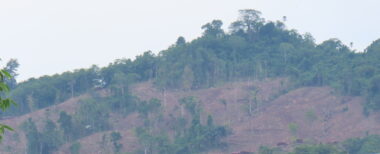
In terms of GHG emissions from the combustion of biomass fuels, either CO2 emissions due to deforestation and degradation or that from combustion should be evaluated. While the former is tricky to understand and evaluate, in fact, cases of deforestation and degradation, including clearcutting, have been reported in production areas.
![[NGO Joint Statement] Co-firing of Biomass in Coal Plants or Conversion of Coal Power Plants to Dedicated Biomass Power Plants is Greenwashing –Biomass accelerates climate change and destroys forest ecosystems](/img/wp/thum_foejapan.png)

