[Joint Statement] The Japanese Government Must Not Provide Public Financial Support for U.S. Fossil Fuel Infrastructure as a Bargaining Chip for Trump
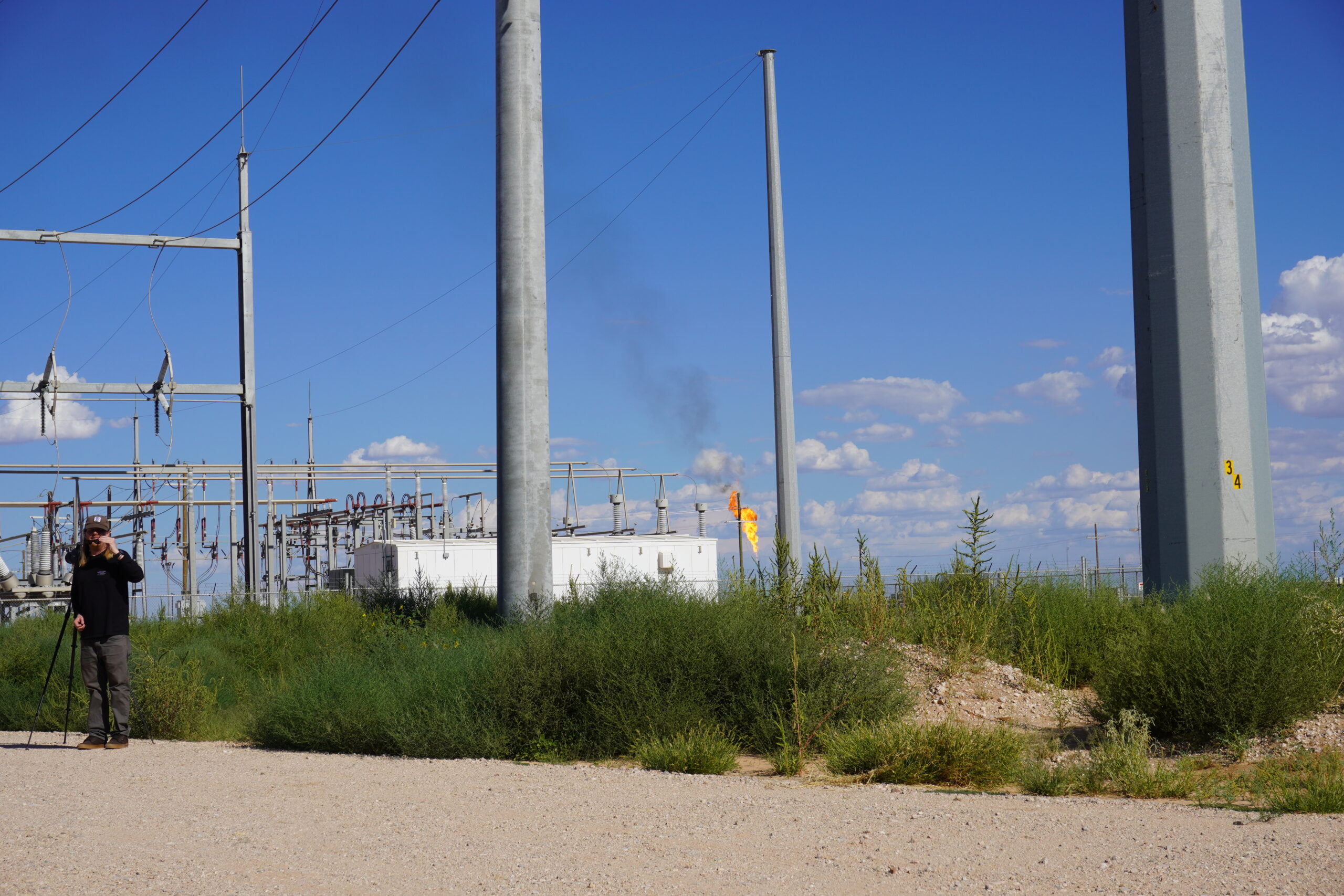
On February 20, 2026, 29 civil society organizations from Japan, the United States, and beyond issued a joint statement titled, “The Japanese Government Must Not Use Public Finance for Fossil Fuel Infrastructure as a Bargaining Chip for Trump Tariffs,” in response to reports that fossil fuel projects were included in the Government of Japan’s investment and financing package for the United States. The statement expresses serious concern over the potential public support for a large-scale gas-fired power plant in Ohio and crude oil export infrastructure in Texas, and calls on the Government of Japan, the Japan Bank for International Cooperation (JBIC), and Nippon Export and Investment Insurance (NEXI) to immediately withdraw consideration of support for these fossil fuel projects.
The statement underscores that there is no room for new fossil fuel development in light of the 1.5°C goal, G7 commitments, and the scientific findings of the IEA and IPCC. It also highlights the severity of methane emissions from the U.S. oil and gas sector, as well as documented environmental and health harms linked to existing LNG projects supported by Japanese public finance. Furthermore, it argues that using public funds for fossil fuel infrastructure as a bargaining chip in tariff negotiations cannot be considered a “responsible” use of public finance, and urges the Japanese government to align its policy decisions with international commitments and climate science.
Please see the full joint statement below for details. (PDF available here)
Joint Statement
The Japanese Government Must Not Provide Public Financial Support for U.S. Fossil Fuel Infrastructure as a Bargaining Chip for Trump
February 20, 2026
29 Civil society organizations in Japan, the United States, and beyond express deep concern that fossil fuel projects are included in the first tranche of Japan’s investment and financing package to the United States, announced on February 18 (JST) by President Trump as an achievement of the so-called “Trump tariffs.” We call on the Government of Japan, the Japan Bank for International Cooperation (JBIC), and Nippon Export and Investment Insurance (NEXI) to immediately withdraw consideration of support for these fossil fuel projects.
The first tranche reportedly includes one of the world’s largest gas-fired power plants to-be in Ohio (9.2 million kilowatts) and a crude oil export terminal in Texas. These projects run counter to the essential global objective of “transitioning away from fossil fuels,” which is indispensable to avoiding the climate crisis. In the U.S. Gulf Coast region, numerous fossil fuel projects financed by Japanese public and private institutions have already caused environmental damage and human rights violations in local communities. The new investment package risks compounding these harms. Moreover, future changes in U.S. administrations and policy direction could render such fossil fuel infrastructure “stranded assets.”
Citizens in both Japan and the United States have clearly voiced opposition to such fossil fuel expansion. For example, regarding the Alaska LNG project, more than 150 organizations worldwide issued an open letter urging that public support should not be granted to environmentally destructive projects in response to pressure from the Trump administration. As the climate crisis intensifies and the global community must strengthen efforts to transition away from fossil fuels, it is unacceptable to roll back climate action to appease the Trump administration. Providing public financial support for fossil fuel projects as part of tariff negotiations—thereby harming local communities and the global environment—cannot live up to Prime Minister Takaichi’s stated commitment to “responsible proactive fiscal policy.”
According to media reports, the Japanese and U.S. governments are considering establishing a special purpose vehicle to invest in these projects, with JBIC providing finance on the Japanese side and Japanese commercial banks extending loans under NEXI insurance guarantees. Following the February 18 announcement, JBIC and NEXI began considering financing and/or insurance for construction, ownership, and operation of the two fossil fuel infrastructure projects the same day. However, under the Takaichi administration’s stated commitment to “responsible proactive fiscal policy,” it must be reconsidered whether allocating Japanese public funds to fossil fuel projects truly constitutes “responsible” action. In particular, new oil and gas projects must be evaluated in light of the following considerations.
International Agreements and Science Are Clear: There Is No Room for New Fossil Fuel Projects
At the 2022 G7 Elmau Summit, the Japanese government committed to ending new direct public support for the international unabated fossil fuel energy sector by the end of 2022, except in limited circumstances clearly defined by each country consistent with a 1.5°C warming limit and the goals of the Paris Agreement. Climate think tank Climate Analytics’s Climate Action Tracker has assessed that U.S. climate targets and policies are not aligned with the 1.5°C goal. Therefore, support by JBIC and NEXI for the Ohio gas-fired power plant and Texas crude oil export infrastructure would clearly violate this G7 commitment.
The International Energy Agency (IEA), in its analysis of pathways to net zero by 2050, has reaffirmed that no new oil, gas, or coal projects are required to achieve the 1.5°C target. The latest report of the Intergovernmental Panel on Climate Change (IPCC) also warns that estimated CO₂ emissions from existing fossil fuel infrastructure alone would already push global warming beyond 1.5°C. The scientific conclusion is unequivocal: there is no remaining carbon budget for the development of new fossil fuel projects if the worst impacts of climate change are to be avoided.
At the 28th Conference of the Parties (COP28) to the UN Framework Convention on Climate Change, attended by more than 190 countries, governments agreed to “transition away from fossil fuels.” As climate disasters intensify in Japan and around the world, it is unacceptable to allocate public funds to new gas-fired power plants or crude oil export infrastructure. The Japanese government has a responsibility to uphold its international commitments.
Severe Methane Emissions from U.S. Oil and Gas Projects
The primary component of fossil gas is methane, an extremely potent greenhouse gas. Methane’s global warming potential is 29.8 times that of CO₂ over a 100-year time frame (GWP100) and 82.5 times over a 20-year time frame (GWP20). Methane is emitted and leaked throughout the gas supply chain. When these emissions are taken into account, lifecycle greenhouse gas emissions from LNG—particularly LNG produced in the United States—have been reported to be 33% higher than those from coal.
The gas-fired power plant under consideration is not exempt from methane emissions. Investigations conducted by Oilfield Witness, which monitors and documents pollution from the oil and gas industry in the United States using optical gas imaging technology, have confirmed methane emissions from gas-fired power plants. According to FoE Japan’s estimates, methane accounts for 46% of the direct emissions (on a GWP20 basis) from fossil fuel projects supported by JBIC in 2024. When methane is properly accounted for, continued financial support for gas projects becomes even more indefensible.
Greenhouse Gas Emissions from JBIC’s Fossil Fuel Financing Are Not Aligned with the IPCC’s 1.5°C Pathway
Public financial support for overseas fossil fuel projects through JBIC and other institutions has already resulted in enormous greenhouse gas emissions. FoE Japan estimates that greenhouse gas emissions attributable to JBIC in 2024 amounted to approximately 408 million tons of CO₂ equivalent (GWP20, mobilized emissions). If JBIC were considered a country, it would rank 20th in the world in terms of greenhouse gas emissions—exceeding the annual emissions of countries such as France, the United Kingdom, and Italy.
Moreover, JBIC’s annual greenhouse gas emissions trajectory is not aligned with the reduction rate required by the IPCC—approximately 43% below 2019 levels by 2030. Even assuming that JBIC were to cease all new fossil gas financing from 2025 onward, its emissions pathway would still fail to align with the 1.5°C target. Financing the Ohio gas-fired power plant and Texas crude oil export infrastructure would further widen this gap.
Severe Environmental Destruction and Health Impacts at U.S. LNG Facilities Supported by Japanese Public Finance
On the U.S. Gulf Coast, LNG projects such as Cameron LNG and Freeport LNG—supported by JBIC and other Japanese institutions—have already caused serious environmental damage and health impacts in surrounding communities. At Freeport LNG, a June 2022 explosion released approximately 3,400 cubic meters of methane, injured multiple people, including children, and forced the terminal to suspend operations for eight months. Such incidents demonstrate that Japanese public financial support through JBIC and NEXI is inseparable from the expansion of fossil fuel development that sacrifices local health, environmental integrity, and community well-being. It is unacceptable to continue supporting fossil fuel projects that impose further harm on frontline communities.
Signatories of the Statement
Friends of the Earth Japan
Japan Center for a Sustainable Environment and Society (JACSES)
350.org Japan
Kiko Network
Mekong Watch
Rainforest Action Network
350Hawaii
Oilfield Witness
Better Brazoria Freeport Texas
Oil Change International
Turtle Island Restoration Network
Unitarian Universalist Service Committee
Friends of the Earth United States
Gulf South Fossil Finance Hub
Zero Hour
Jubilee Australia Research Centre
The Australia Institute
Green America
Save Ohio Parks
FreshWater Accountability Project
Ohio Valley Environmental Advocates
Mid-Ohio Valley Climate Action
Earth Ethics, Inc.
198 methods
Dayton Energy Collaborative
Third Act Ohio
Columbus Community Bill of RIghts
Radioactive Waste Alert
Ohio Nuclear Free Network
Contact
Friends of the Earth Japan
Address: 1-21-9 Komone, Itabashi-ku, Tokyo, Japan 173-0037
Email: osada@foejapan.org