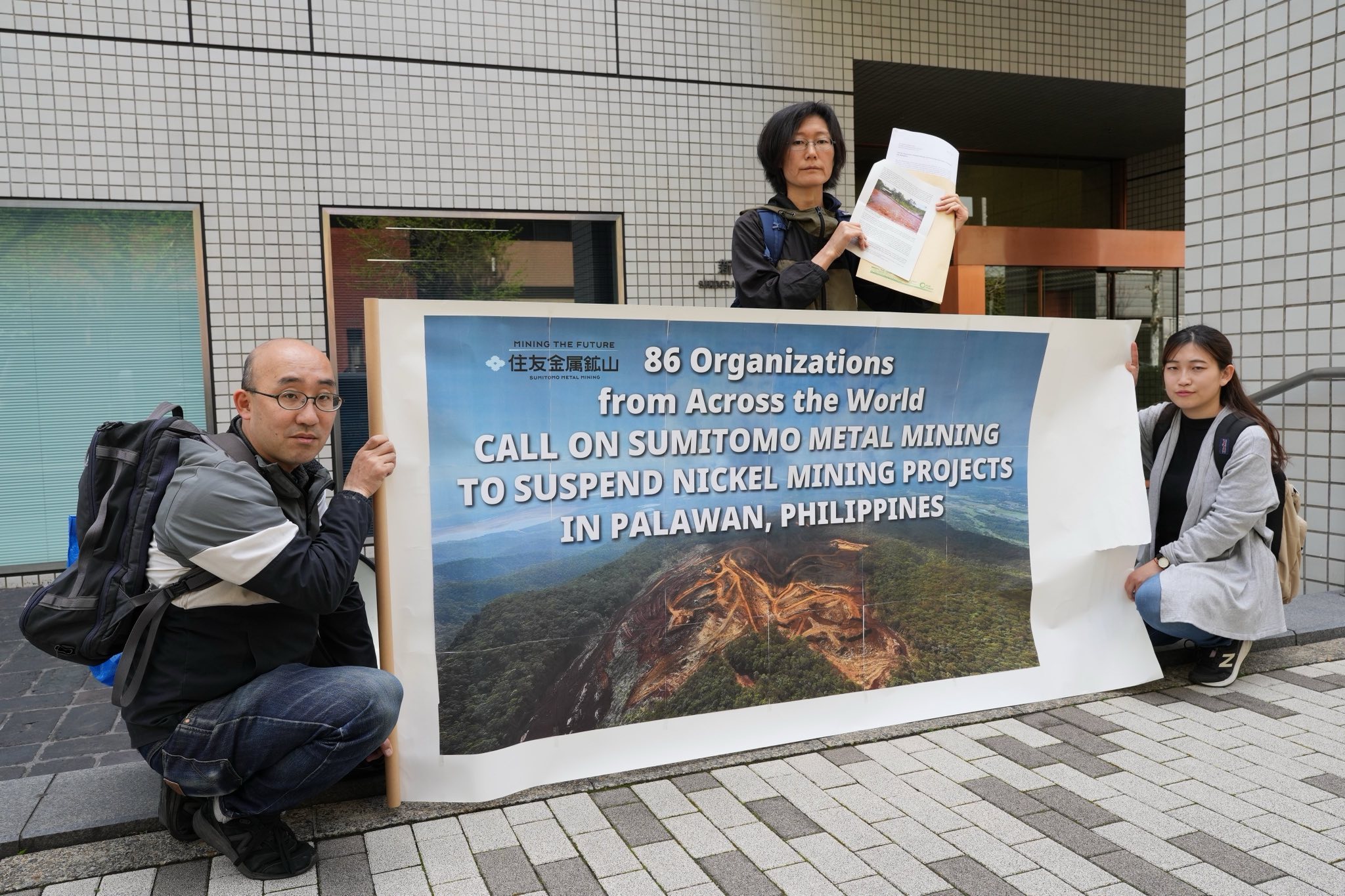
International Outcry Over Sumitomo Metal Mining’s Philippine Nickel Projects: Global Petition Signed by 11,315 Individuals Across 64 Countries Submitted Over 15-Year Unaddressed Water and Health Risks
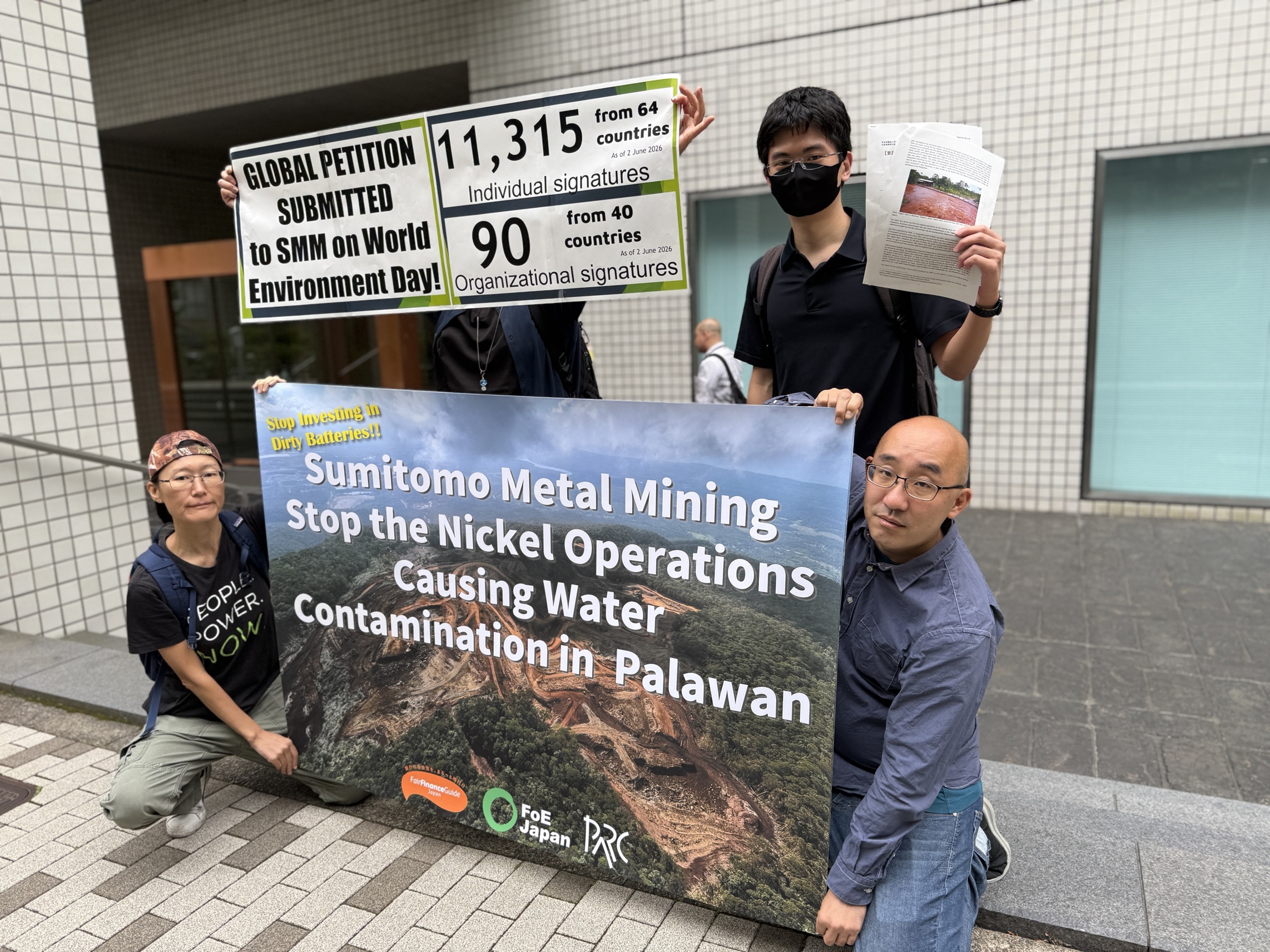
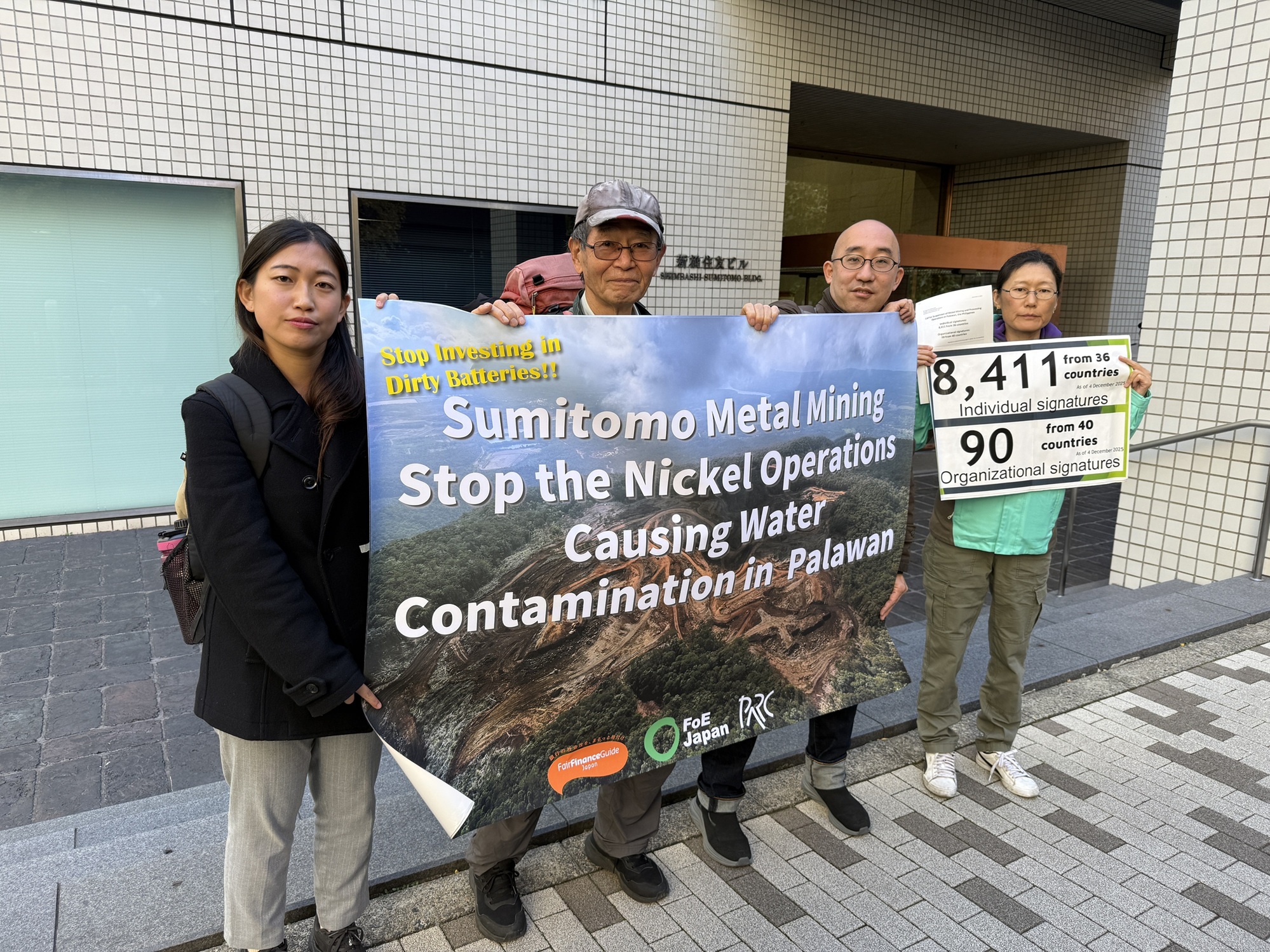
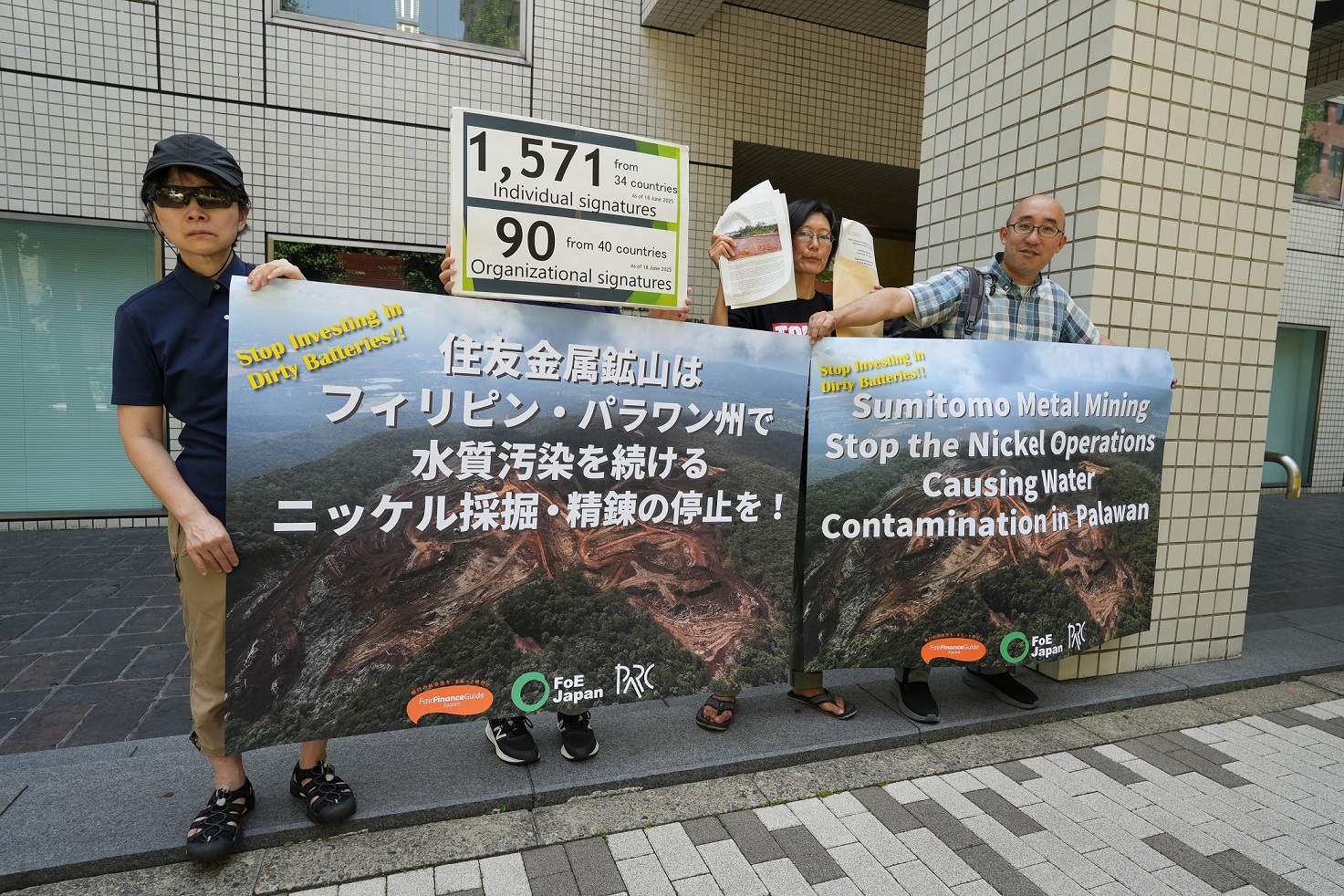
TOKYO, Japan — On June 5, World Environment Day, ahead of Sumitomo Metal Mining Co., Ltd.’s (SMM) upcoming Annual General Shareholders’ Meeting on June 25, a global petition was resubmitted to the company demanding the immediate suspension of the Coral Bay Nickel Processing Project and the Rio Tuba Nickel Mining Project in Palawan, Philippines.
The petition was launched by a coalition of four civil society organizations from the Philippines and Japan: Environmental Legal Assistance Center (ELAC), Legal Rights and Natural Resources Center (LRC) / FoE Philippines, Pacific Asia Resource Center (PARC), Friends of the Earth Japan. Representatives from the two Japanese organizations visited SMM’s headquarters in Tokyo to personally deliver the petition and a demand letter. The petition gathered signatures from 11,315 individuals across 64 countries and was endorsed by 90 organizations from 40 countries as of the third submission deadline on June 2.
For over 15 years, toxic heavy metal contamination, including hexavalent chromium—a known carcinogen—has been repeatedly reported in the Togpon River, which runs adjacent to the nickel development projects.
Continuous water quality monitoring conducted by FoE Japan at fixed points along the Togpon River, with the support of an expert, reveals that hexavalent chromium levels consistently exceed the environmental quality standards of both Japan and the Philippines during the rainy season. Given that the Togpon River is fully accessible to the public and that residential areas are located nearby, effective and immediate measures to mitigate water pollution are urgently needed to avert future health risks for the local population.
In response to previous demand letters submitted during the first and second rounds of the petition, SMM stated that it has confirmed that effluent levels do not exceed the “wastewater standards" approved by the Philippine government authorities. However, the company has refused to disclose the specific numerical values of these standards, which are essential for an objective evaluation. SMM has thus failed to fulfill its corporate accountability.
Furthermore, the expansion of the mining operations into Mt. Bulanjao is currently moving forward without the implementation of any effective water pollution countermeasures. Mt. Bulanjao is a region of rich biodiversity and encompasses critical forests and watersheds upon which indigenous peoples and local communities deeply depend for their livelihoods.
The Department of Environment and Natural Resources (DENR) of the Philippines has issued Special Tree Cutting and Earth Balling Permits (STCEP) for a total of 87,090 trees to the Rio Tuba Nickel Mining Corporation (RTNMC) since 2024. This massive deforestation has raised grave concerns among local environmental groups, including ELAC.
It has been pointed out, based on the aforementioned water quality monitoring, that the clearing of forests and the subsequent exposure of topsoil without effective pollution countermeasures may be one of the primary causes of hexavalent chromium runoff. Under these conditions, there is an undeniable risk that the current mining expansion in Mt. Bulanjao will lead to the spread of contamination beyond the Togpon River system to other surrounding waterways. Indigenous peoples and farmers who rely on these rivers for domestic and agricultural water face the threat of adverse impacts for decades to come. There are serious concerns that the runoff of hexavalent chromium outside the project sites will expose an even wider range of local communities to severe health risks.
SMM is the 100% parent company of Coral Bay Nickel Corporation (CBNC), which has operated a High-Pressure Acid Leach (HPAL) processing plant in southern Palawan since 2005. All nickel-cobalt mixed sulfide produced at the plants is exported to SMM’s factories in Japan, where it is used to manufacture battery materials and other products. Notably, SMM’s battery materials are officially adopted in the electric vehicle (EV) batteries of Tesla and Toyota Motor Corporation. In addition, SMM holds a 25.9% stake in Nickel Asia Corporation (NAC), the largest shareholder (60%) of RTNMC, making SMM deeply embedded in these operations as both an investor and a primary procurer of raw materials.
In its own Policy on Human Rights, SMM explicitly states that it “support the UN Guiding Principles on Business and Human Rights,” “avoids causing or contributing to adverse human rights impacts through our business activities, and works towards correcting and remedying any such situation that may arise,” and recognizes the importance of human rights issues throughout its “Supply Chain”. Given its deep involvement in the projects in Palawan, both as an investor and as a raw material procurer, global citizens are strongly calling on SMM to act in accordance with its own policy by taking prompt and appropriate action: namely, suspending the operations and implementing proper remedial measures.
For more information, please see the following petition.
> PDF is available here
Call for Suspension of Nickel Mining and Processing Operations in Palawan, the Philippines
June 3, 2026
Mr. Nobuhiro Matsumoto
President and Representative Director
Sumitomo Metal Mining Co., Ltd.
Individual signatures:
11,315 from 64 countries
Organizational signatures:
90 from 40 countries
(Signatures collected till June 2, 2026/ The 3rd deadline)
Mr. Nobuhiro Matsumoto
President and Representative Director
Sumitomo Metal Mining Co., Ltd.
Call for Suspension of Nickel Mining and Processing Operations in Palawan, the Philippines
We, the undersigned Civil Society Organizations and individuals, call on Sumitomo Metal Mining Co., Ltd. (SMM) to immediately suspend its nickel processing operation in Palawan until effective and publicly verifiable countermeasures are developed and implemented to avoid destructive impacts on local communities. It is deeply regrettable that your company along with allied businesses have failed to take effective measures to address the ongoing pollution of toxic heavy metals in the waters that flow out of the nickel mining site related to your operation for over a decade.
Communities including those of Indigenous Peoples in Palawan Province, Philippines residing in the vicinity of the HPAL processing plant operated by a wholly owned subsidiary of yours, Coral Bay Nickel Corporation (CBNC)[1], and of the mining site of Rio Tuba Nickel Mining Corporation (RTNMC) to which you have business relations both in terms of investments and supply chains, have been exposed to health damage risk due to the pollution. Furthermore, RTNMC has begun expanding its operations to Mt. Bulanjao in addition to its existing mining concession without offering any verifiable countermeasures to prevent water pollution from the new mining operations. It is clear as day, that Indigenous Peoples and farmers, who depend on the rivers and streams that flow from Mt. Bulanjao for domestic and agricultural water, will continue to suffer from such pollution over decades to come.
With expectations of growing global demand for nickel in the context of efforts toward a decarbonized society[2], including the promotion of electric vehicles (EVs) and renewable energy, it is a situation that is far from a “just” energy transition if more local communities are harmed by the new mining expansion. Thus, in order to ensure the protection of the life and human rights of the local communities, we demand SMM to do the followings;
- Disclose a set of tested and verifiable measures to stop the ongoing water contamination surrounding the existing mining operation area, along with a timeline to implement those countermeasures;
- Disclose a set of tested and verifiable measures to prevent future water contamination surrounding the new mining operation at Mt. Bulanjao, along with a timeline to implement those countermeasures;
- Obtain Free, Prior, and Informed Consent (FPIC) from local affected communities regarding the above measures along with procedures to withdraw the consent in the case there are controversial inconsistencies to be found in the mining operations;
- Suspend all mining and processing operations by CBNC and RTNMC until all the above is met.
In continuous water quality surveys conducted by FoE Japan from 2009 to date (temporarily suspended from 2020 to 2022 due to the COVID-19 pandemic) in the vicinity of the Rio Tuba Nickel Mine in Municipality of Batarasa, Palawan, with the collaboration of an expert[3], hexavalent chromium exceeding environmental standards has been detected constantly during the rainy season at a fixed point in the Togpon River flowing from the existing mining concession of RTNMC. Hexavalent chromium is a highly toxic substance that is carcinogenic and also causes skin irritation, etc.
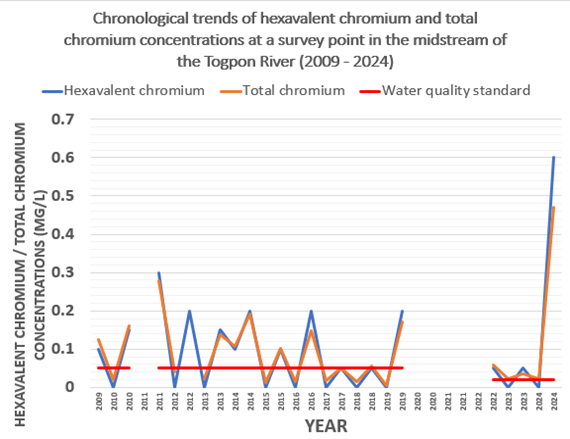
According to the report (December 4, 2024) (attached to this request), which compiled the results of the 15-year investigation by the same expert, the levels of hexavalent chromium and total chromium in the Togpon River are lower during the dry season, while during the rainy season they significantly exceed the Japanese Environmental standard and the Japanese Water Supply Act standard (both 0.05 mg/L, and 0.02 mg/L after the revision) (see the figure above). In addition, during the most recent rainy season in September 2024, when heavy rainfall continued day after day, highest concentrations of hexavalent chromium (0.6 mg/L) and total chromium (0.471 mg/L) were observed in 15 years, equivalent with 24 to 30 times higher than the standards (see the photo below). The latest environmental standards in the Philippines stipulate the standard for hexavalent chromium as 0.01 mg/L for freshwater (the effluent standard is 0.02 mg/L) and as 0.05 mg/L for marine water (the effluent standard is 0.1 mg/L)[4], while the drinking water standard stipulates 0.05 mg/L for total chromium[5]. And therefore, it also comes as no doubt that the above-mentioned values exceed the standards in the Philippines.
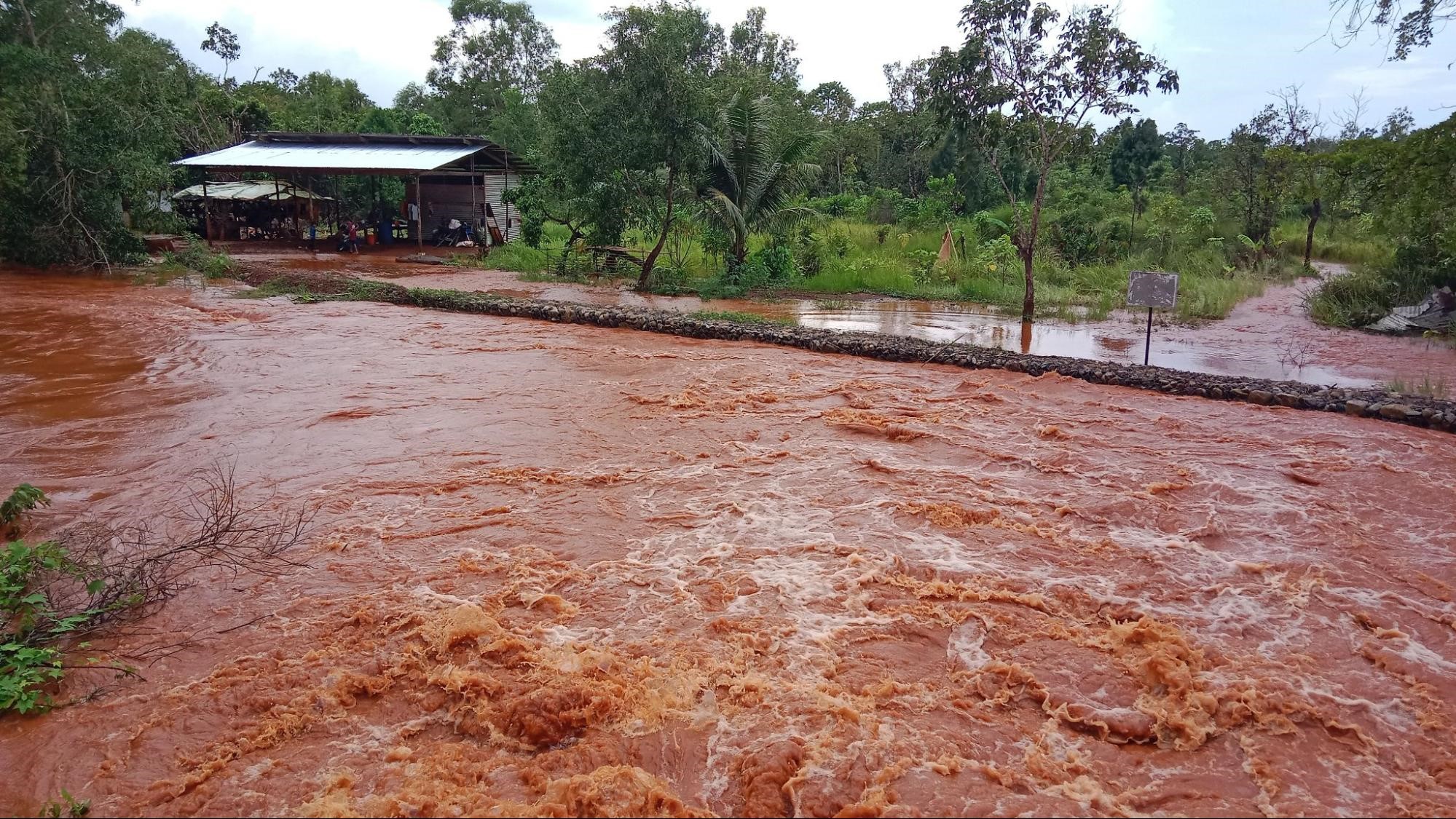
The report also points out that the ongoing operations at the existing mine site have caused not only severe hexavalent chromium contamination but also nickel contamination in the Togpon River, and that toxic sludge sediments brought into the Rio Tuba estuary may be causing further destruction of the ecosystem.
You have explained that CBNC, in cooperation with RTNMC, has been taking measures to reduce the discharge of hexavalent chromium since about 2012, such as covering low-grade ore piled in the open fields, expanding and widening the settling ponds, and installing activated carbon near the outlet of a settling pond that leads to the Togpon River. However, for the past 15 years, the water contamination situation in the Togpon River has shown no signs of improvement. This means that CBNC and RTNMC have failed to take effective pollution control measures and have not been able to properly manage pollution discharges from the mining site.
With extreme weather phenomena occurring more frequently in recent years, and flooding and landslides due to rainstorms increasing, the observation of the largest level of hexavalent chromium in 15 years during the 2024 rainy season, when heavy rains continued, implies that more destructive environmental pollution could be caused in the future. Moreover, as long as the project operators have failed to take effective pollution mitigation measures, it is not hard to assume that new mining activities by the RTNMC at Mt. Bulanjao will cause similar environmental pollution in other rivers, as mentioned at the beginning of this letter. In other words, residents who depend on rivers sourced from Mt. Bulanjao for water used for their daily lives, agriculture, etc., may suffer health damage, adverse effects on their livelihoods, etc., for decades to come.
You import all the nickel-cobalt mixed sulfide produced by CBNC to your plants in Japan to produce battery materials[6], etc. And CBNC is a wholly owned subsidiary of your company. You also have a 26% stake in Nickel Asia Corporation (NAC)[7], the largest shareholder (60%) in RTNMC, and are therefore responsible as an equity holder.
Your company’s “Responsible Mineral Sourcing Policy”[8] stipulates that you do not buy minerals that may be associated with human rights violations, environmental destruction. Further, with regard to the human rights violations to be caused/being caused by the mining operations of RTNMC, the raw material supplier for the smelting operations by CBNC, that is, the human rights violations in the supply chain, appropriate due diligence should be conducted in accordance with your company’s “Policy on Human Rights”[9] based on international norms such as the “UN Guiding Principles on Business and Human Rights”.
The long-term threat to the well-being of local communities living around Mt. Bulanjao by the expansion of nickel development, which is considered essential to decarbonization efforts, is not a “ just” energy transition and should not be tolerated. We call on your company to immediately suspend CBNC’s smelting operations until you can properly conduct human rights due diligence on local communities adversely affected by nickel development and ensure that effective environmental pollution countermeasures are developed and implemented at nickel development sites in Palawan. In suspending the project, adequate consideration must also be given to the workers, including taking measures to maintain the daily lives of the related workers.
Attachment:
“Environmental Pollution by Hexavalent Chromium, etc. Caused by Nickel Mining and Smelting Operations in Rio Tuba, Palawan Island” by Junichi Onuma (Nagoya University Disaster Research Group) (December 4, 2024)
Cc:
Mr. Nobumitsu Hayashi, Governor of the Japan Bank for International Cooperation (JBIC)
Mr. Atsuo Kuroda, Chairman and CEO of Nippon Export and Investment Insurance (NEXI)
Business and Human Rights Policy Office, Trade Policy Bureau, Ministry of Economy, Trade and Industry (METI)
Trade and Investment Consultation Division on Business and Human Rights, Japan External Trade Organization(JETRO)
Initiative for Responsible Mining Assurance (IRMA)
Mr. Elon Musk, CEO, Tesla, Inc.
Mr. Masahiro Shinada, Chief Executive Officer (CEO), Panasonic Corporation
Mr. Koji Sato, President, Member of the Board of Directors (Representative Director, Toyota Motor Corporation
Mr. Masamichi Okada, President, TOYOTA BATTERY Co., Ltd.
LIST OF SIGNATORIES:
This letter is signed by 11,315 individuals from 64 countries, and 90 organizations, including those working at international and regional levels plus organizations working nationally in 40 countries.
INITIAL SIGNATORIES:
Environmental Legal Assistance Center (ELAC)
Legal Rights and Natural Resources Center (LRC) / FoE Philippines
Pacific Asia Resource Center (PARC)
Friends of the Earth Japan
LIST OF INDIVIDUAL SIGNATORIES: 11,315 from 64 countries
(skip the details for the website)
LIST OF ORGANIZATIONAL SIGNATORIES: 90 from 40 countries (including Initial Signatories)
Philippines
Alyansa ng mga Mamamayan para sa Karapatang Pantao
Alyansa Tigil Mina (ATM)
Ang Aroroy Ay Alagaan, Inc (4As)
Apostolic Vicariate of Taytay
Bantay Kita
Center for Energy, Ecology, and Development (CEED)
Center for Environmental Concerns – Philippines
COALITION AGAINST LAND GRABBING (CALG)
Convergence of Initiatives for Environmental Justice (CIEJ)
Cordillera Peoples Alliance
Episcopal Commission on Indigenous Peoples (ECIP)
Freedom from Debt Coalition
NTFP EP Philippines
SIBUYANON Against Mining-SAM
Tambayan Center for Children’s Rights, Inc.
UNLAD-BLFFA
International and regional organizations
Arab and North Africa Region of La Via Campesina ARNA
Batani Foundation
Climate Rights International
Friends of the Earth Asia Pacific
Friends of the Earth Europe
Friends of the Earth International
GAIA Asia Pacific
Yes to Life, No to Mining global solidarity network
Albania
Environmental center for Development Education and Networking (EDEN)
Argentina
Tierra Nativa / Amigos de la Tierra Argentina
Australia
Aid/Watch
Bangladesh
Bangladesh Environmental Lawyers Association
Bangladesh Krishok Federation
Bosnia and Herzegovina
FOEE Bosnia and Herzegovina / Centar za životnu sredinu
Brazil
Friends of the Earth Brazil
Canada
MiningWatch Canada
China, Hong Kong
China Labour Bulletin
Costa Rica
COECOCEIBA – Amigos de la Tierra Costa Rica
Denmark
NOAH – Friends of the Earth Denmark
France
Amis de la Terre France / Friends of the Earth France
Germany
PowerShift
urgewald
Ghana
AbibiNsroma Foundation
India
mm&P (mines,minerals & PEOPLE)
Indonesia
AEER
Aksi! for gender, social and ecological justice
Center of Economic and Law Studies (CELIOS)
Jaringan Advokasi Tambang (JATAM)
KRuHA
Perkumpan Lingkar Hutan Lestari
Research Centre for Crisis and Alternative Development Strategy (INKRISPENA)
TKPT Indonesia
Trend Asia
Wahana Lingkungan Hidup Indonesia (WALHI)/FoE Indonesia
Yayasan PUSAKA Bentala Rakyat
Japan
Human Rights Now
Japan Center for a Sustainable Environment and Society (JACSES)
Japan International Volunteer Center (JVC)
Japan Tropical Forest Action Network (JATAN)
Mekong Watch
Luxembourg
Mouvement Ecologique – Friends of the Earth Luxembourg
Madagascar
Centre de Recherches et d’Appui pour les Alternatives de Développement – Océan Indien (CRAAD-OI)Dé
Malaysia
Sahabat Alam Malaysia – Friends of the Earth Malaysia
Malta
Friends of the Earth Malta
Mexico
Otros Mundos Chiapas/Amigos de la Tierra México
Mongolia
Centre for Human Rights and Development
Mozambique
JA!Justica Ambiental
Netherlands
Milieudefensie
SOMO
Norway
SINTEF Digital
Pakistan
Pakistan Fisherfolk Forum
Palestine
FoE Palestine/The Palestinian Environmental NGOs Network (PENGON)
Palestinian Agricultural institutions coalition (PAIC)
Portugal
ZERO – Association for the Sustainability of the Earth System
Russia
Indigenous Russia Information Centre
Scotland
Friends of the Earth Scotland
South Korea
Solutions For Our Climate (SFOC)
Spain
Amigas de la Tierra /FoE Spain
SETEM
Sweden
Jordens Vänner/Friends of the Earth Sweden
Taiwan
Serve the People Association
Timor – Leste
La’o Hamutuk Institut
Togo
Les Amis de la Terre-Togo
United Kingdom
Campaign for Human Rights in the Philippines
Friends of the Earth England, Wales & Northern Ireland
London Mining Network
Uruguay
Redes / FoE Uruguay
United States of America
Friends of the Earth US
Honor the Earth
Malach Consulting
Contact:
Friends of the Earth Japan
1-21-9 Komone, Itabashi-ku, Tokyo 173-0037, Japan
TEL: 03-6909-5983 FAX: 03-6909-5986
E-mail: hatae@foejapan.org
[1] https://www.smm.co.jp/en/news/release/2025/01/001934.html
[2] IEA “Global Critical Minerals Outlook 2024” p.136-153(https://iea.blob.core.windows.net/assets/ee01701d-1d5c-4ba8-9df6-abeeac9de99a/GlobalCriticalMineralsOutlook2024.pdf )
[3] Mr. Junichi Onuma (Nagoya University Disaster Research Group, former chief researcher at the Aichi Prefecture Environmental Research Center)
[4] the Philippine Department of Environment and Natural Resources (DENR) Administrative Order No. 2016-08, “Water Quality Guidelines and Effluent Standards,” (2016. 5-year grace period)
[5] the Philippine Department of Health (DOH) “National Drinking Water Standards” (2017)
[6] The company’s battery materials have been officially adopted by Tesla, the largest electric vehicle company in the U.S., as well as by Toyota Motor Corporation for their in-car batteries.
[7] https://www.smm.co.jp/en/corp_info/location/overseas/
[8] https://www.smm.co.jp/en/sustainability/management/procurement/
[9] https://www.smm.co.jp/en/sustainability/management/humanrights_procurement/
Reference:
Video clip “Behind decarbonization technologies: What the expansion of Rio Tuba nickel mine will bring”: